Ro Koster & Ad Kil
Enlarge Your Positive Ecological Footprint!
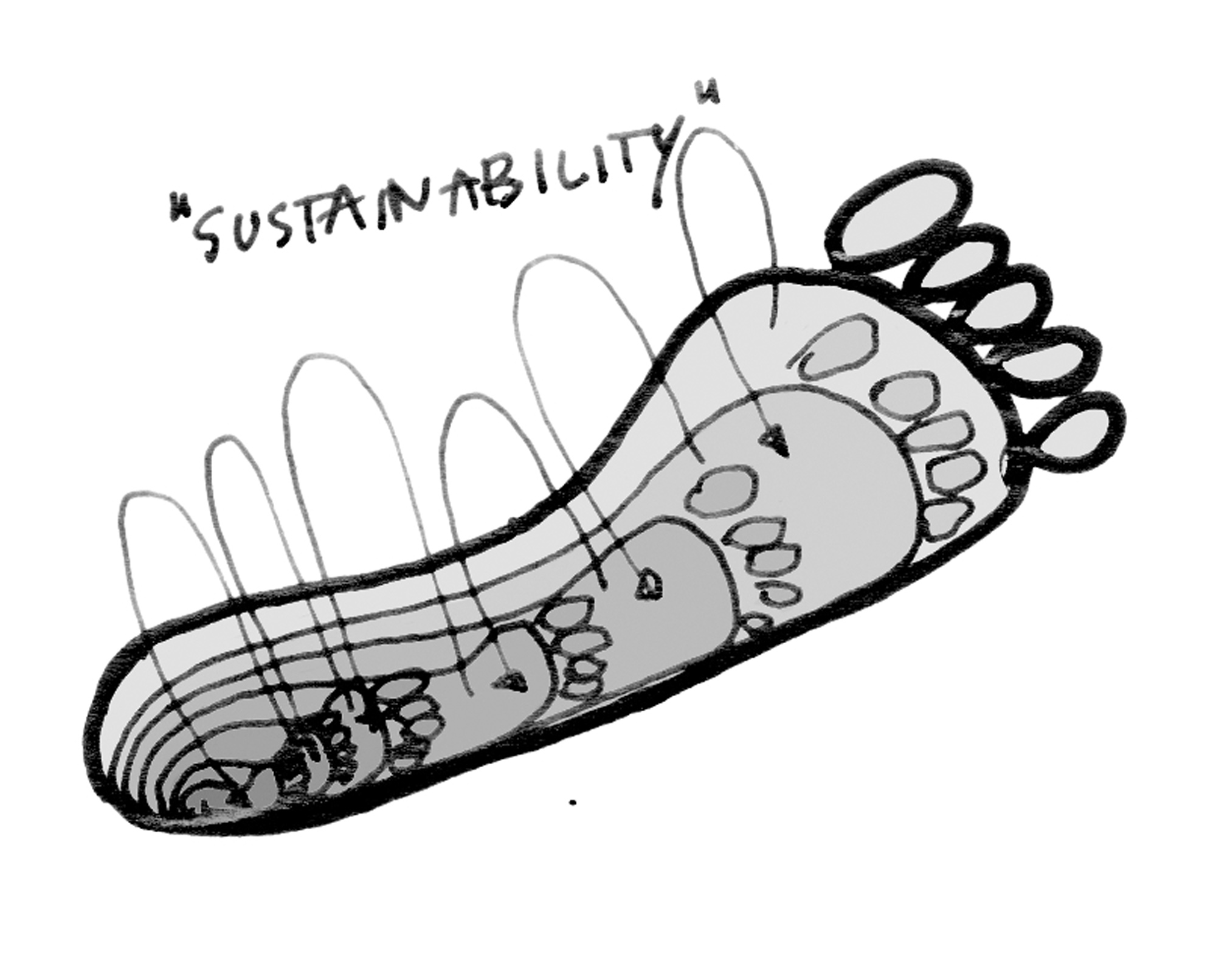
FUN and Sustainabiliy are some key words we work with, but traditional sustainabiliy is not what makes us happy. What we actually mean is that ‘traditional’ sustainabiliy is all about minimising your footprint on the earth. Use less energy, have minimum impact on the ecosystem. In general, the less you use and produce and the less you are present, the be er for the earth. is is what we call ‘being less bad’.
We do not believe in that as a solution. Nature itself doesn’t work that way. Look at a cherry tree. A cherry tree doesn’t try to minimise its impact. It tries to maximise its impact! Produce as many blossoms as it can, produce thousands of cherries each year, although it only needs one seed to sustain itself into the ture. A lot of people, animals, ngus, and insects thrive on the things a tree delivers: food, shadow, oxygen etc. at is what we call ‘being good’. A tree maximises its footprint and in that way not only sustains itself, but is really a part of an ecosystem.
And that is what we try to do with our designs! We try to do good things instead of being less bad. And we do that by making the design part of the ecosystem and making the footprint of the system as fertile and big as possible.
About Sustainability
Traditional sustainability is all about reducing and minimising your impact. Not only on the planet, but also on your direct surroundings. One of the favourite credos of this is ‘reuse, reduce, recycle’. Well that’s a start, but a start of what? A start of minimising your impact. Your ecological, social and economic influence on your direct surroundings, your family, your friends, your garden, your house, your neighbourhood. But also your influence in the bigger scheme of things, reducing your impact on your city, your country, the world. By minimising your impact, you make yourself and your actions as small as possible to prevent harming your environment.
So why doesn’t this sound like something you actually want to do? Well, let me explain. Minimising presumes that the impact you have is negative. That your influence is bad and the things you add to your environment are harmful and negative for that environment. Well, that doesn’t give you a lot of self-confidence, does it?
So traditional sustainability presumes we are a species that is harmful for the environment and the world, and by reducing our actions we could save the planet. We not only find that a very depressing thought, but it is also not very clever, because it presumes that, by being less bad, something good will happen. So there must be a more intelligent solution to this.
About Nature
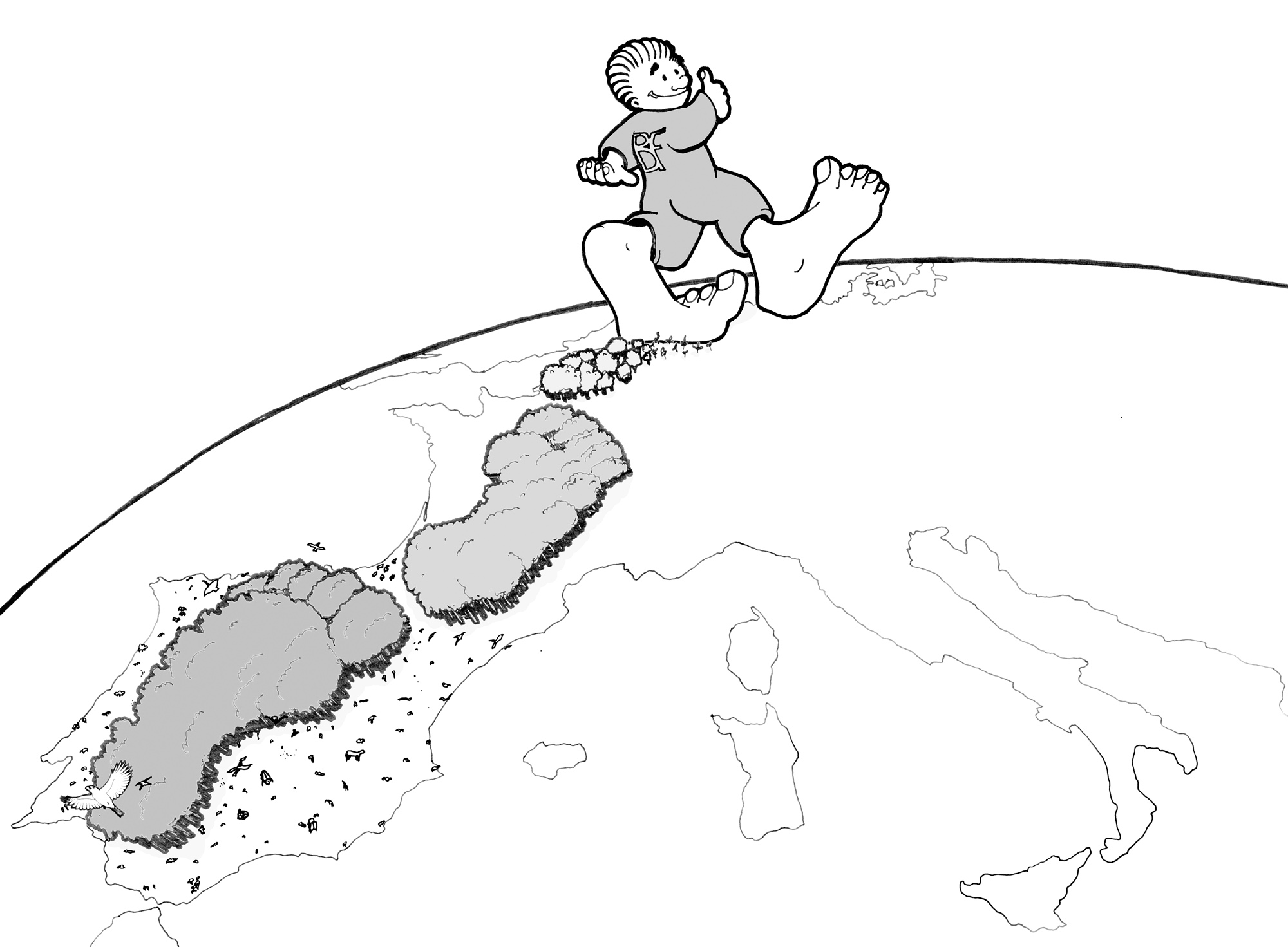
Let’s look at how nature does that. Are species in nature trying to avoid impact on their environment? Are they trying to minimise their negative footprint? No, of course not! Actually, there is no such thing in nature. Ever heard of a tree or an insect with a negative footprint? Do we ever say ‘Oh, there are way too many oak trees (or ants, bacteria, elephants) on this planet, that is really bad for the environment’? No we don’t, and there is a reason for that. Look at an oak tree for example. An oak really takes good care of itself. It grows as big as he can, taking up as much space as there is available, absorbing all the solar energy it can and using that energy to absorb all the water and nutrients it can from the soil, funnelling them to the outermost edges of its branches for even more growth. And in this process it cooperates by feeding the lice that eat its leaves, and with mychorriza to extract nutrients from the soil. And it creates about 100 000 acorns a year that wild boars, jays, squirrels and numerous other species feed on. It houses bird nests and insects, it enriches the soil with its leaves, etcetera. All in all, a full grown oak takes care of 1300 other species, and in the process cleans the air and the water, adds shade and produces oxygen.
So the oak takes good care of itself, but takes care of others as well. It actually adds value to its system and makes its impact on the environment as big as possible.
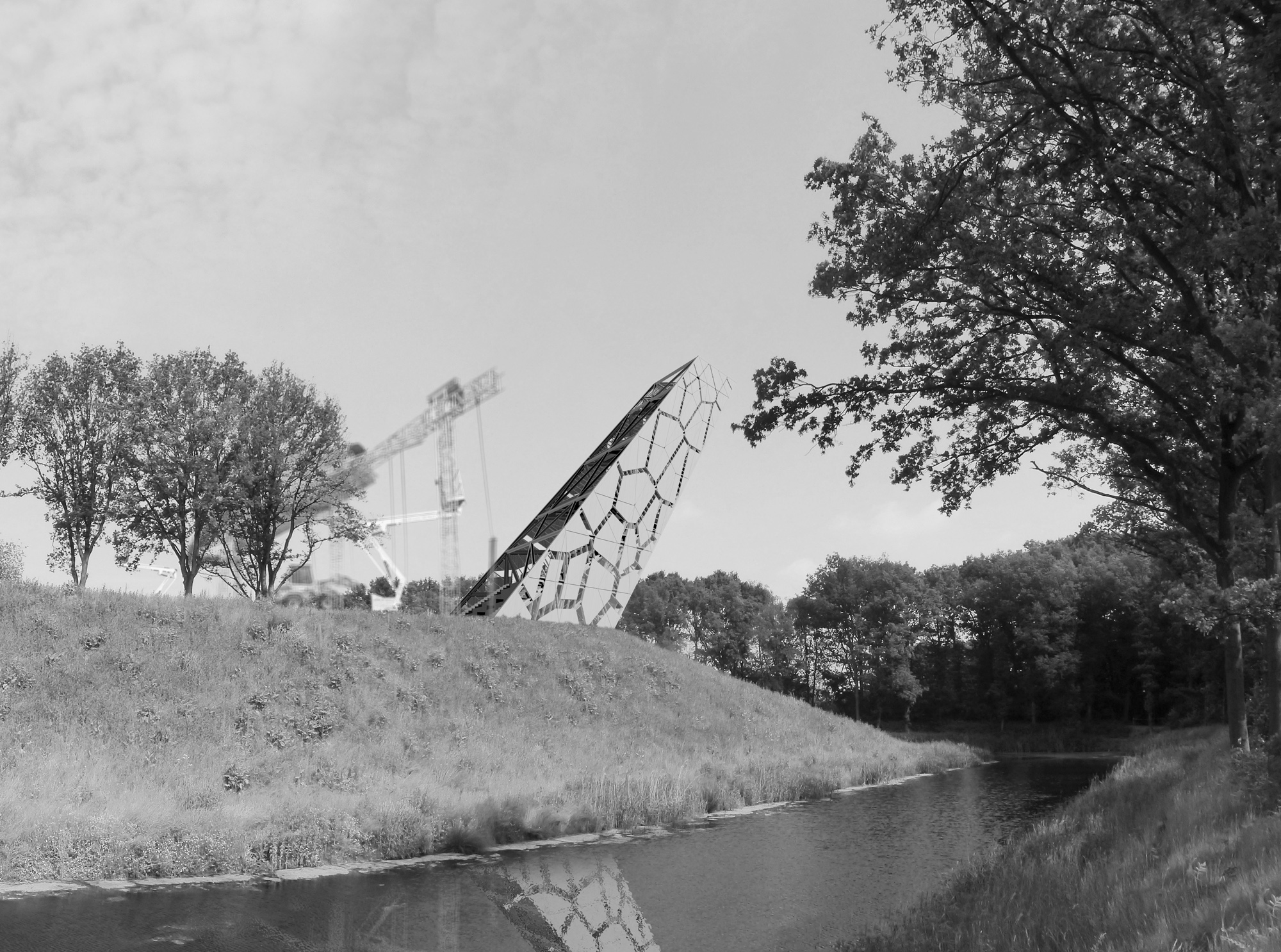
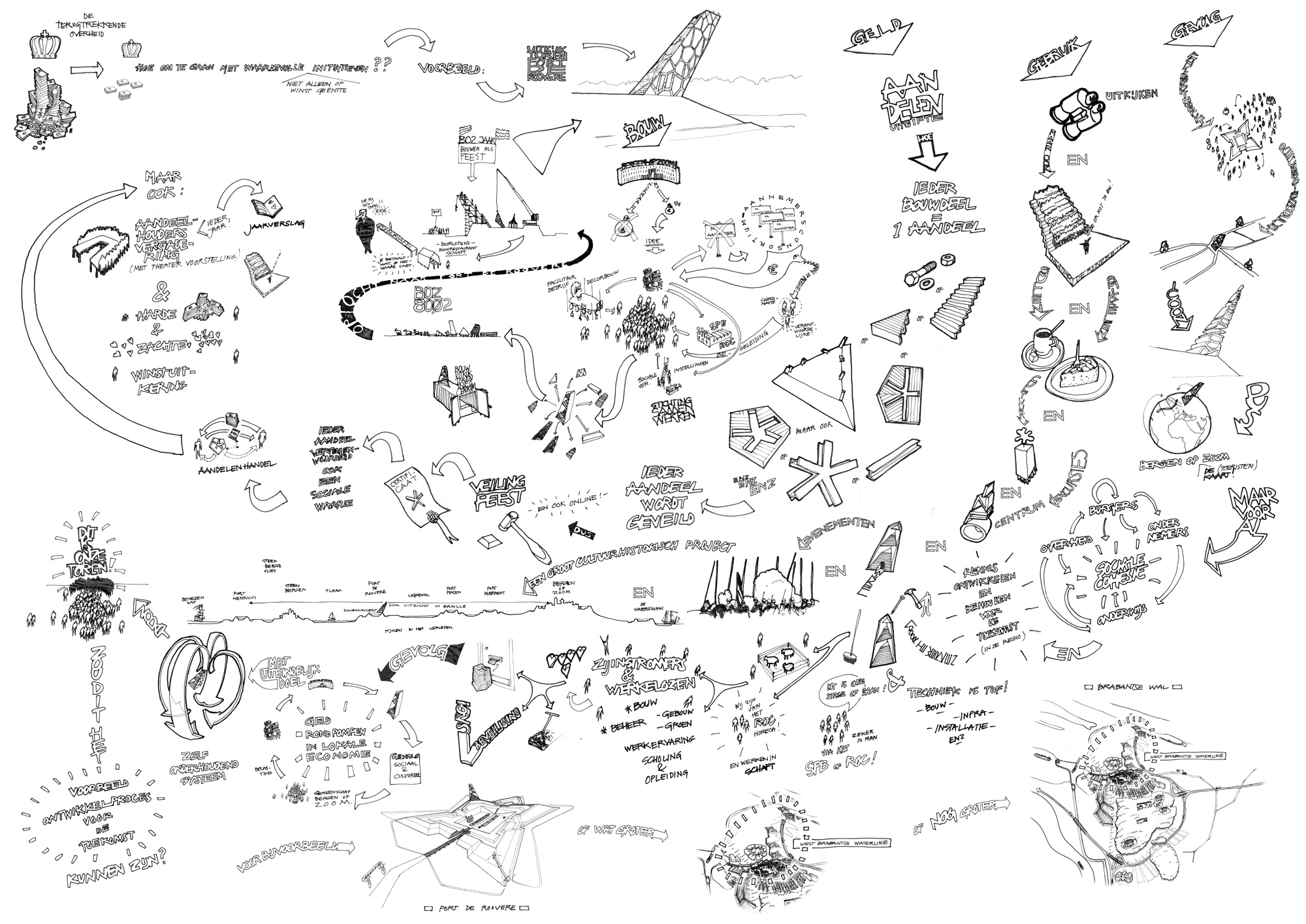
Netherlands
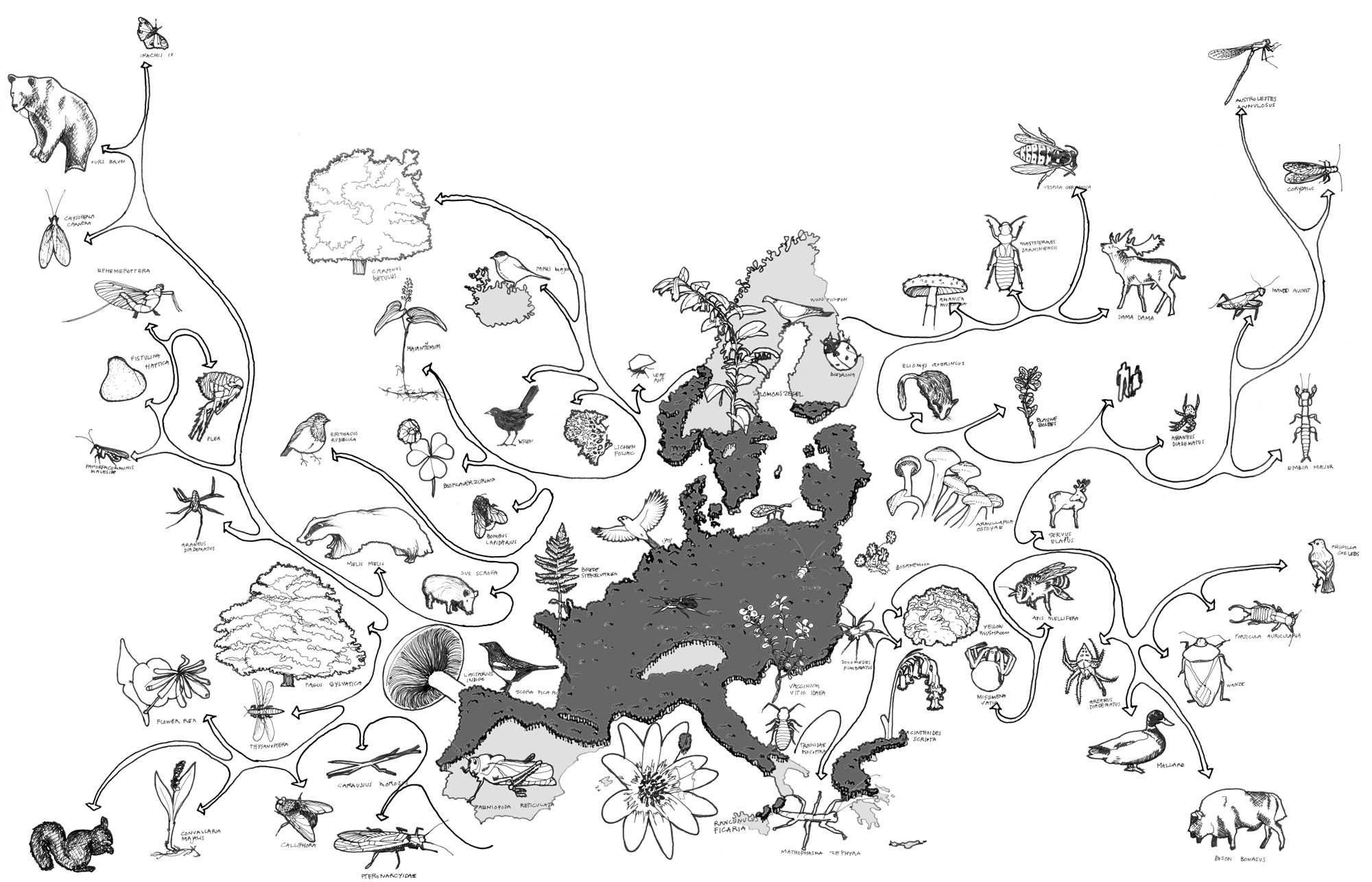
About Positive Footprints
So the example of the oak is a good example of real sustainability. Sustainability that adds value to the system, that has a positive impact on itself as well as on others. As opposed to the negative footprint we saw earlier, an oak has a positive footprint. And the bigger this positive footprint becomes, the better it is for the environment. And that is just the ecological footprint. Because we are human we not only have an ecological footprint, but many more. We have cultural, social and economic footprints. What if we could enlarge them all, depending on our situation?
That would be awesome, wouldn’t it?
Now there is this idea that mankind is not capable of that. That we are too detached from ecosystems, we are solemnly aiming for financial profit, or that leaving positive footprints is nice but just too complicated. We don’t believe in that. We do believe that it is actually quite easy and that it is highly valuable and potentially profitable.
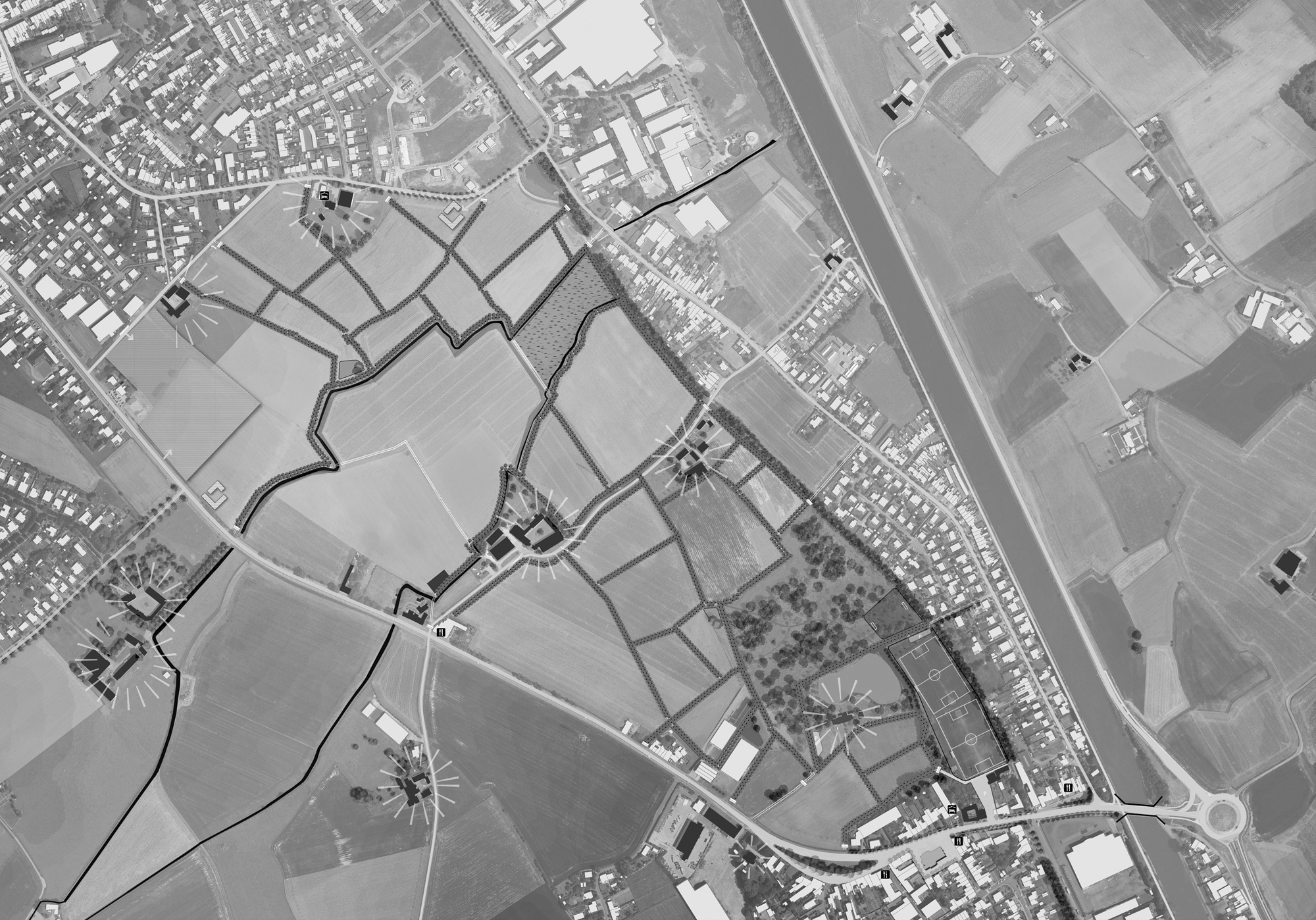
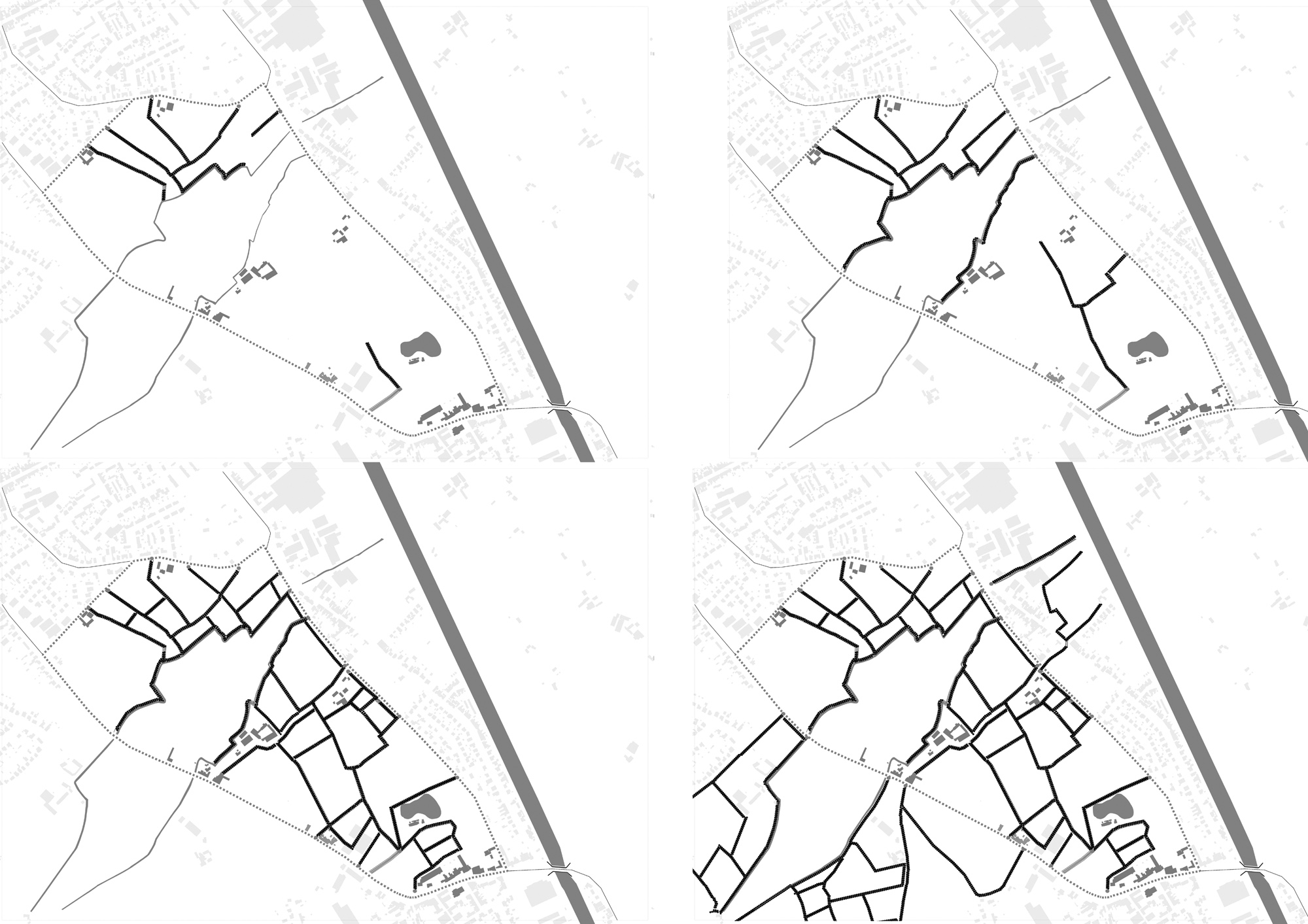
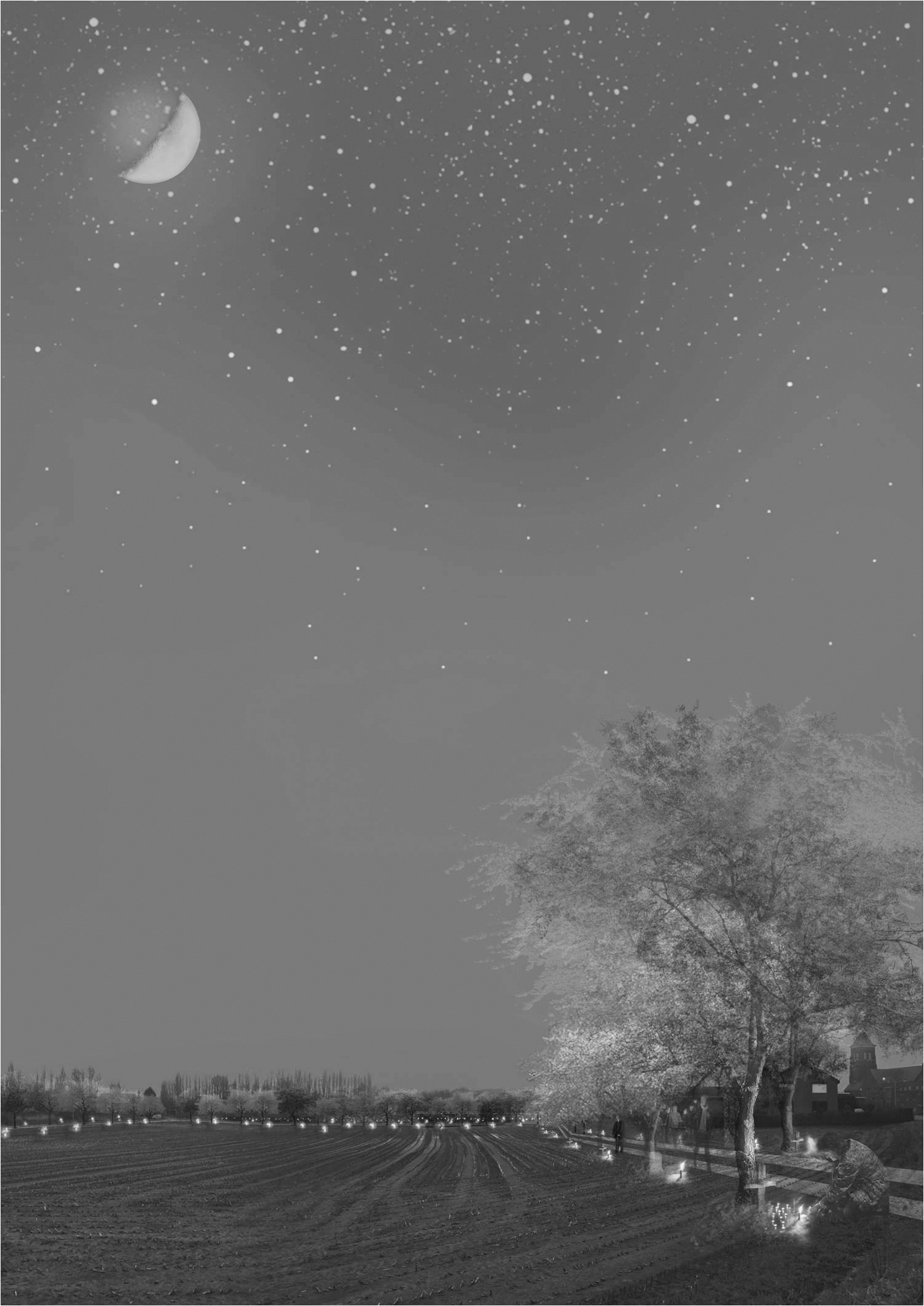
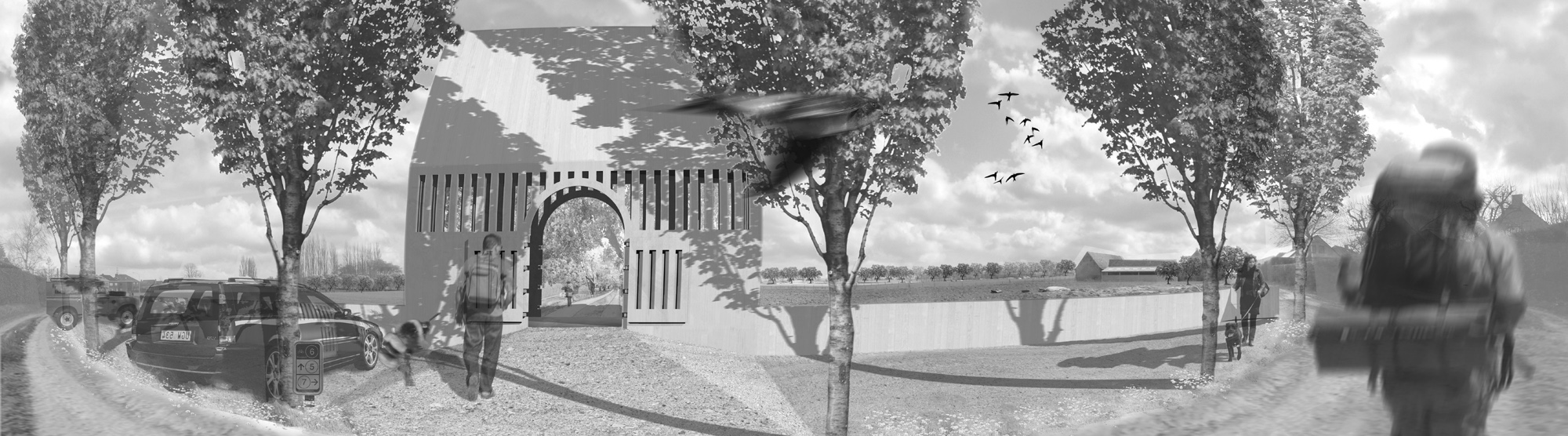
grows as more people get buried. here you see the landscape
changing in 3, 10, 30 and 100 years, Zwevegem, Belgium
About Designing, Products and Ecosystems
I can almost hear you saying ‘Well, that’s all very nice, but how do we actually do that?’ The first thing you have to know is that because we are architects, we look at this as a design problem. I guess you could see it as a sociological or political question, but that just is not our business. And furthermore, we actually believe that design can play a key role in this transition.
Buckminster fuller already said: ‘The best way to predict the future is to design it’. So that is the challenge, changing the world by design. This does not imply designing different things, but designing things differently. So we do not only change our designs, but the way we design.
Let me explain this. We are trained and used to making products. A bridge, a house, an interior, an exhibition. We get a design brief for say, a house, and we will make a house. That, of course, is what our customer wants, and what he will eventually get, but what we should acknowledge is that the object or product we are designing is part of a system. There is a plot, an energy flow, a social environment, a water system, local biodiversity, etcetera. If we truly want our design to add value to these systems, we should not only know these systems, but we should also design our object to fit in these ecosystems as well. And by fitting it in, we can also define its role in those systems and see what our object can contribute. This is actually changing our perspective of designing. The product or object we have been asked to design for our customers will be a result in the search for a system for adding value. We first have to design the system before we can make the product. Now that is something completely different. We are architects or interior architects or product designers and we do not have all the knowledge for this ourselves. That is why we team up with ecologists, marketing people, social workers, biologists or waste managers, all depending on the design brief, the desired ecosystem and the values we want to add.
About Evolution and Growth
And that is just the first step because if you look at systems, they are never static. They are always in a state of dynamic equilibrium. If one thing changes in a system, the rest of the system has to adapt to incorporate this change. And that is the second thing we also have to adapt as designers. We are trained to make a static object. We design a house, and someone will put a lot of effort and money into it to keep it in the same state as on its first day for 50 or maybe 100 years. That is not how things work if you are part of an ecosystem. Systems change all the time, and one of the challenges for us as architects is to incorporate this change in the design. to allow growth, evolution, shrinkage, functional change, etcetera.
About Expression
Design plays a key role in the transition to a real sustainable world. Therefore architects, interior architects and product designers need a different mindset. We have to switch from products to systems and incorporate evolution and change into our designs. This really is easily said, we are on our way and it feels great but – to be honest – we must still learn a lot. Thinking and designing in systems and in change is great, but it is not enough. It is only one part of the design mindset. As designers we want to do more than only expressing a technical solution or explaining and expressing a system. We are human and many of us want to express our love, feelings, irritations, beauty and more. What is so nice about the positive footprint system is that we can enrich it with our own human expressions. It is open to those expressions and it could adapt and embrace our feelings, expressions and love without disturbing the system. It is very exiting when these two languages become one. for example in the design of the Lettenhof, a park and cemetery in Belgium where we designed an evolving landscape which is not only a cemetery but also a park and a recreation area. It incorporates the natural principle of growth, but also the cultural needs of the inhabitants to be buried beside their own village. Besides that, the landscape becomes more beautiful with fruit trees, small landscape ‘rooms’ and little chapels sprinkled around the park. This is the area where the boundaries between human behaviour and nature disappear. Whenever this happens, you really feel what a positive footprint means.
Conclusion
This piece of text (or manifesto as you could describe it) contains some of the theoretical conclusions we have come across in our design field over the years. And it is still developing. We find that incorporating new experiences and solutions requires a continuous change of insights and design methods. The methods and solutions, as well as designs, should evolve. But for now the conclusion is that if we are able to listen very closely to the questions of our time, we can place these questions in bigger systems. That is if we are able to take up our responsibility as designers, the creators of the (our) future, if we can see what the need of the situation is in a bigger scheme and transform it in a positive action without ignoring our own needs. We can really play our role in the ecosystem again and add value to our environment in all sorts of ways. Let’s create positive footprints!