Jüri Kermik
Thinking and Making Design Futures
ONE of the most interesting and important tasks of contemporary art and design education is to explain and re-define the range and extent of the blurred discipline fields in relation to design in the context of social priorities and changing industrial landscapes. guided by the values and needs of contemporary society, the designer has to figure out how to approach and reconcile the continuity of traditions with advances and innovation in digital technologies in order to harness their combined energy for future generations.
The age of change offers opportunities to re-design and re-think design process(es), but also to devise educational models capable of keeping up and pro-actively engaging with industry, where old principles and conventional production chains have been superseded by new rules and technological-geographical possibilities including crowd-sourcing and co-production.
This transformation of practices through a fusion of processes and working methods associated with the industrial, digital and the handmade is an inherent part of changes in value systems that engage with environmental concerns, habits of consumption and the way spaces, objects and artefacts are conceived, produced, distributed and ultimately received. The design practice of the 21st century could not be identified without positioning its credentials in relation to territorial changes across and in between different disciplines. We are seeing the architect, designer, the craft-maker and the artist acquire new fluid identities, releasing the energy and a fusion of processes and methods increasingly associated with the digital, and new types of networks for co-creation, crowdsourcing and user engagement in the design process itself.
There is a standing invitation for design education to engage with the challenges and processes of change and to make its existing disciplinary structures adaptable to keep up with real world transformations.1 In this context, re-thinking, re-processing and re-editing are becoming dominant forms of cultural production – as a way of constructing new objects, environments and experiences in a world of limited resources.
This article draws from developmental discussions during 2012-13 between a group of academics – researchers associated with the College of Arts and humanities, University of Brighton2, and their mutually creative curiosity to find and explore new pathways in the open environment of the interdisciplinary exchange. These discussions and explorations subsequently led to a sequence of co-authored research papers on interdisciplinary perspectives3. It considers the potential of post-disciplinary design education for dealing with social change and the altered technological conditions in which the designer must operate, and claims that the key to the (re)definition of design, and its diverging futures, resides in the evolution and comprehension of a shared interdisciplinary knowledge. In particular, it suggests that innovation in transdisciplinary thinking, and new forms of knowing by shared enquiry, process and design, create adaptive and responsible designers.
Design Futures, an innovation hub for design and design thinking at the University of Brighton, represents a new conceptual model for an advanced type of design education and interchange. Design futures is committed to build partnerships, and to source tools and skills to enable designers to deal with the complexities of the future. Drawing its theoretical baseline beyond traditional disciplines and adopting the model of the four orders of design, categorised by Buchanan as ‘Signs, Things, Actions and Thoughts’4, Design Futures aims to transcend established subject boundaries in order to define and extract useful generic elements of design processes and practice to combine these into one curricular experience.5
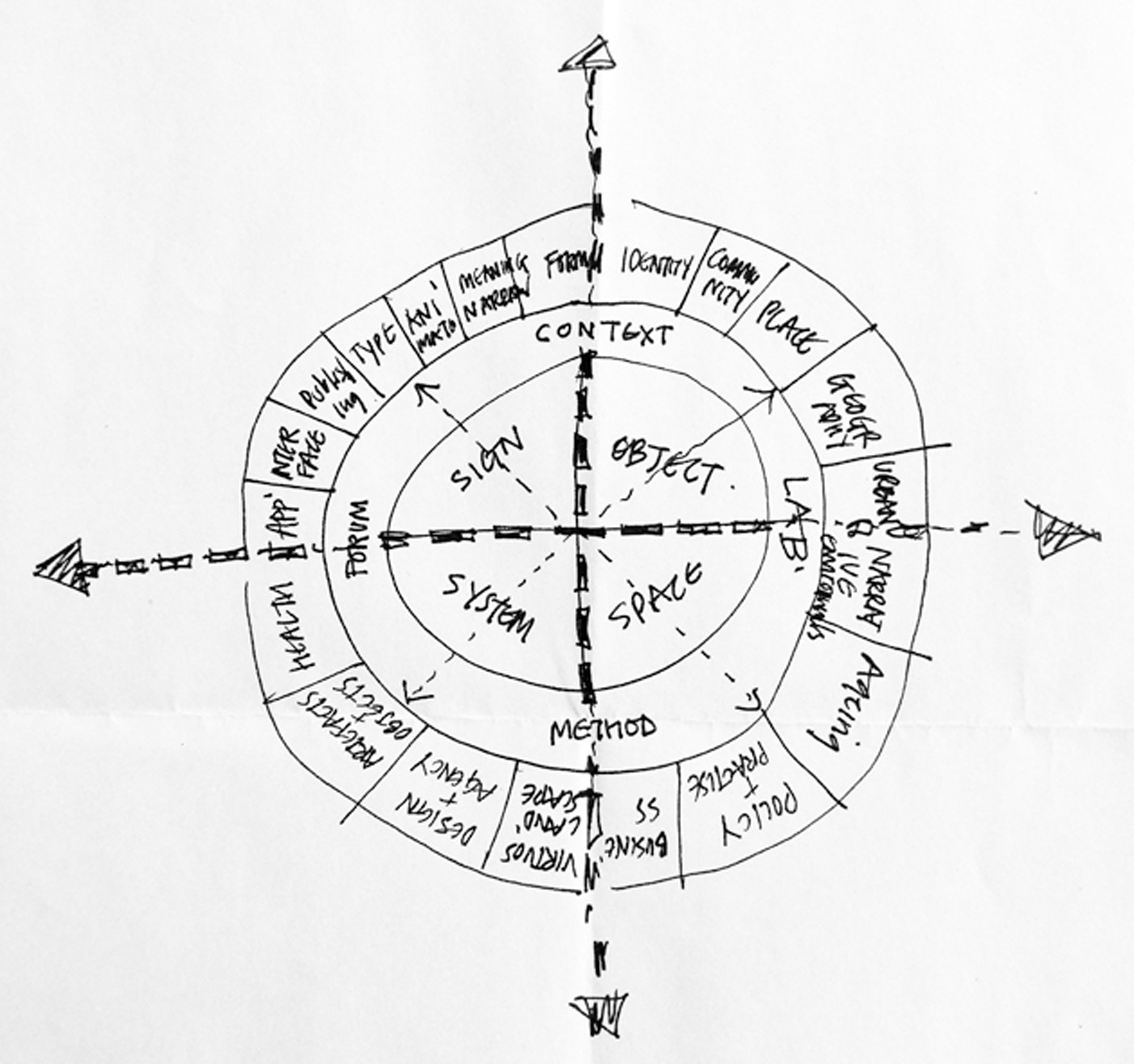
During the early summer of 2013, development discussions around Design Futures concentrated on tools of discipline-specific annotation, methods of process scripting and the universally generative dimension of mapping. Disciplines under scrutiny included sound, 3D form and space, animation and material processes. Inspired and informed by the idea of transferability and compatibility of annotational codes and systems, especially in the 4-dimensional time-based environment, the concept of the GRID (Generative Research Interface Device) was proposed.6 As a conceptual generative tool, the GRID was meant to provide means by which meta-concepts of practice can be mapped, communicated and understood, but which at the same time can be flexible and adaptive to the particular design task in hand. The GRID, as argued below and demonstrated through four case studies from the seemingly distinct fields of coding (digital sound art), interior architecture, 3D design and narrative (creative writing), not only helps to explain and update individual discipline-specific approaches. It allows the creator-researcher to search for and to experiment with connections between these, identifying creative processes and methodologies –potentially providing a meta-language that can forge new relationships within design thinking.
1 Richard Buchanan, ‘Design Research and the New Learning’ Design Issues Vol. 17, no. 4 (2001). Donald Arthur Norman, Emotional Design (NY: Basic Books, 2004).
2 Initial members of the working group included Jüri Kermik, graeme Brooker, Thor Magnusson and Michael Wilson.
3 Jüri Kermik, ‘Design and Craft – A Changing Relationship at the heart of Design Education’, DesignEd Asia (hong Kong, 2012). Jüri Kermik, Thor Magnusson, Michael Wilson and graeme Brooker, ‘Design futures: The grid – A transdisciplinary Education’ Knowing (by) Designing (Brussels: faculty of Architecture KU Leuven 2013). Damon taylor, Jüri Kermik and Carlos Peralta, ‘Designing Design futures’, DesignEd Asia (Hong Kong, 2013).
4 Richard Buchanan, ‘Wicked Problems in Design Thinking’ Design Issues, Vol 8, no. 2 (1992).
5 Jüri Kermik and graeme Brooker, Design Futures development documentation (2012).
6 The term gRID, introduced by Jüri Kermik, became a trigger for the subsequent co-authored research paper: Jüri Kermik, Thor Magnusson, Micael Wilson and graeme Brooker, ‘Design futures: The grid – A transdisciplinary Education’, Knowing (by) Designing (Brussels, 2013).
The Grid
In order to create and advance the conditions for transdisciplinary thinking in design education, tools are needed which are multifunctional and tuned to be compatible with both hard and soft wares of different disciplines. These tools need to be flexible and adaptive to diverse domains of subject-specific processes and languages. Each discipline has a history, processes and a language, which needs to interface with the history and language of another. This can cause problems, as common language in the diverse scientific fields or other disciplines has not existed since the end of the Renaissance. Design futures thus proposes to engage with a conceptual GRID, a generative tool that enables to step closer to transparent communication and collaborative development across diverse disciplinary territories.
Central to the idea of working with(in) the GRID structure is the challenge to use abstraction when relating the particular to the general – to isolate variables and to reveal relationships between them as a way of examining the behaviour and functioning of the system as a whole. for example, the length of a walking stick could be determined by cross-referencing the set of variables present in the system of walking. These may include seasonal data, sex, age and weight of the walker, pace of the step and the bounciness of the walking shoe, and so on…
However, it is not just the accuracy of mapping combined with the relevance of selected variables that matters. Importantly, the gRID could be used as a dynamic model to test how different set(s) of variables cause changes in the outcome.
In the context of learning, it is an exercise of developing a system of logic and defining the rules of the script – the language capable of communicating both the discovery, process and proposition – whether intuitive or rational. In terms of interdisciplinary communication, the GRID serves as a lens capturing the landscape or territory as seen from the perspective of different disciplines.
The GRID is required to be dynamic, multidimensional, heterogeneous, and diachronic. It cannot have a pre-determined shape or a structure, but its nodes need to represent concepts from various disciplines that might be termed differently in each domain language, and they contain objects, states, and operations (nouns, adjectives and verbs) that evolve over time.
Constructed each time as a purpose-made framework of diagrammatic representation, the GRID ensures a level of accuracy in isolating a set of issues unique to the given purpose, provides feedback loops to understand behavioural characteristics of variables and design opportunities, and decisions associated with them. With connections between variables set up, it becomes a tool for both building those vital loops of feedback and making the design process visible and more tangible.
The GRID is not a didactic instrument. It should be constructed to be adaptive and to respond to changes and external stimuli when new and diverse places, objects, systems, actions and narratives are assigned as its nodes. Its most useful characteristic is this part of the setup where ‘listening’ to feedback and the testing of variables against alternatives and speculative scenarios take place.
The methodology of mapping the relationships and connections between elements within the system and rehearsing these relationships becomes a measure of depth and quality of the design process in picking up threads of narrative from that space, which is taken as infinitely dense. Cecil Balmond describes design space as a ‘black hole’, which contains all the possibilities: ‘to realise a design one has to map or unravel a trace from out of that hole. Each thread has its own story – we could leave it or stretch it out or fold it into our creativity.’7 The GRID provides n-dimensional compatibility to record these unravelling processes as narrative.
As a tool (or a map) devised to represent the composition and possible successions of harmony within structures of space and time
– until they are fully tested and rehearsed – it ends up being embedded deep within the awareness of meters and modularity that can be then disregarded to become a prerequisite for creative freedom. The usefulness of the gRID as a map representing reality is not necessarily a matter of its literal truthfulness, but in having an analogous structure (Bateson, 1972).89 The generative-analytical function mode of the GRID ensures that mapping of the object, territory or space it refers to does not become an aim in itself only to materialise into something useless and cumbersome as a map left behind by members of the College of Cartographers who, according to Borges, had ‘struck a Map of the Empire whose size was that of the Empire, and which coincided point for point with it.’10 The qualitative dimension of the development process (and mapping which is an integral part of it) emerges from the depth of articulation, the capturing, of the point of intervention as seen from the perspective of different disciplines. The four viewpoints interwoven into the GRID environment, which are outlined below, illustrate some metaconcepts of design as represented in different practices.11
7 Cecil Balmond, Informal (Prestel, Munich: 2002).
8 gregory Bateson, Steps to an Ecology of Mind (University of Chicago Press, 1972).
9 Thomas Steinfeld, Cover essay for J. Abercrombie, Class trip, ECM Records, 2004.
10 Jorge Luis Borges, ‘Of Exactitude in Science’, A Universal History of Infamy (Penguin, 1984).
11 Jüri Kermik, Thor Magnusson, Michael Wilson and Graeme Brooker, ‘Design futures: The grid – A transdisciplinary Education’, Knowing (by) Designing, (Brussels, 2013).

system as a whole.

The Mappa Mundi: (Re)presentation and (Re)Interpretation
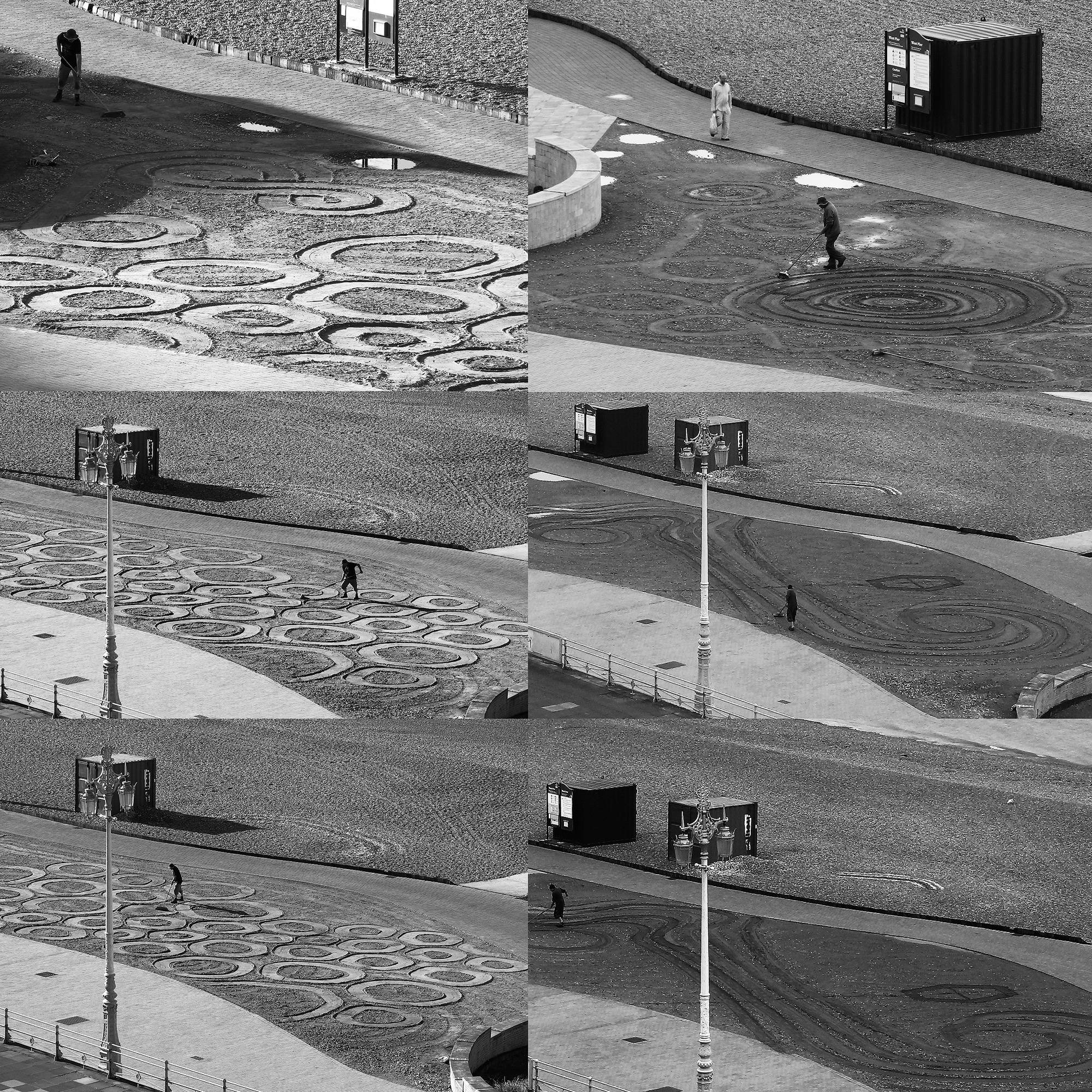
Ideas about map-making are relevant to the processes and methodologies of design at many levels. Michael Wilson’s research engages with the narrative potential of design as exploratory, driven by the sense of discovery by the user as they come up with an interpretation, taking their own journey through engagement with the GRID of reference points: ‘The map was in fact originally a pattern for explanatory or interpretative work, with medieval scholars translating and bringing out the fullness of the design work through a complementary phase of design use’.12
Similarly to Balmond’s idea of design process as a ‘selected thread of narrative’, Wilson identifies the principle of storytelling as a design tool, ‘a kind of template, a set of relationalideals, from which a single momentary meaning is made’13
As a case study in transdisciplinary communication, the Hereford Mappa Mundi illustrates an alternative tradition of practices in the formation and transfer of knowledge, one where the interpretative skills of narrative allow us into the design grid and encourage in our own minds a re-formation of the designed work.
12 Michael Wilson ‘Design futures: The grid – A transdisciplinary Education’, Knowing (by) Designing (Brussels, 2013).
13 Ibid.
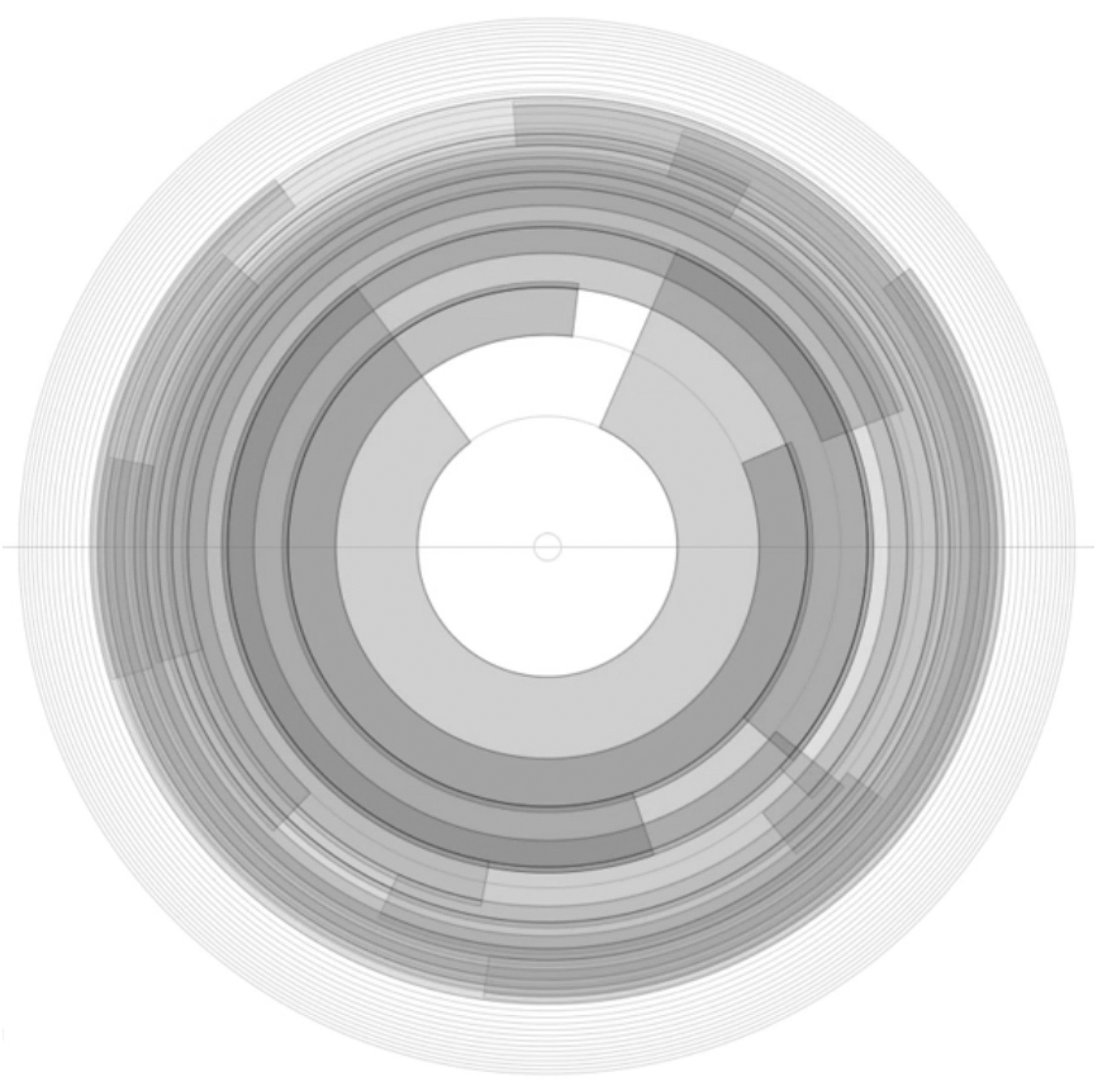
space produces variations of sound (Kermik & Magnusson, ‘to a friend’, 2012). The sound is composed using ixi-audio’s Drone Machines live coding system for musical improvisation (https://vimeo.com/55617747).
Generative Code For Sound: (Re)production
Thor Magnusson’s research into coding, software development and creative sound art is profoundly involved in the front line of contributing to the debate around the changing meaning of the term ‘re-production’. Magnusson argues that ‘with new digital technologies, where the file format of design products, artefacts and artworks can be in the form of code, the context and meaning of the term ‘re-production’ is changing: ‘Code can now easily be written, acting as genotypes for innumerable outputs, or phenotypes that come to life as images, music, levels in computer games, or other types of processor-based and algorithmic content’.14
Furthermore, Magnusson’s argument highlights the value of code-and-script based learning as one of the cornerstones of interdisciplinary design education to take advantage of new digital technologies available for social media and personal fabrication, including 3D printing. The understanding of the code and its readability gives access to the domain of unique objects, where users can design their own products with bespoke software.
Magnusson acknowledges the value of the GRID as an open-access switchboard that allows musicians of diverse backgrounds and styles to compose for the system: ‘Using such a model for musical composition, the composer becomes a system designer and the music critic becomes a system analyst. Listeners become co-creators in the musical composition, executers and hosts for the piece to run’.15
Magnusson’s research and collaborative projects demonstrate the limitless possibilities for trans-modal representation of data. for future designers, these open up new and intriguing spaces and networks of social products where design manifests itself as data represented in another modality through software such as an app on a mobile media device.
14 Thor Magnusson, ‘Design futures: The grid – A transdisciplinary Education’, Knowing (by) Designing (Brussels, 2013).
15 Ibid..
Adaptations: (Re)use and (Re)editing
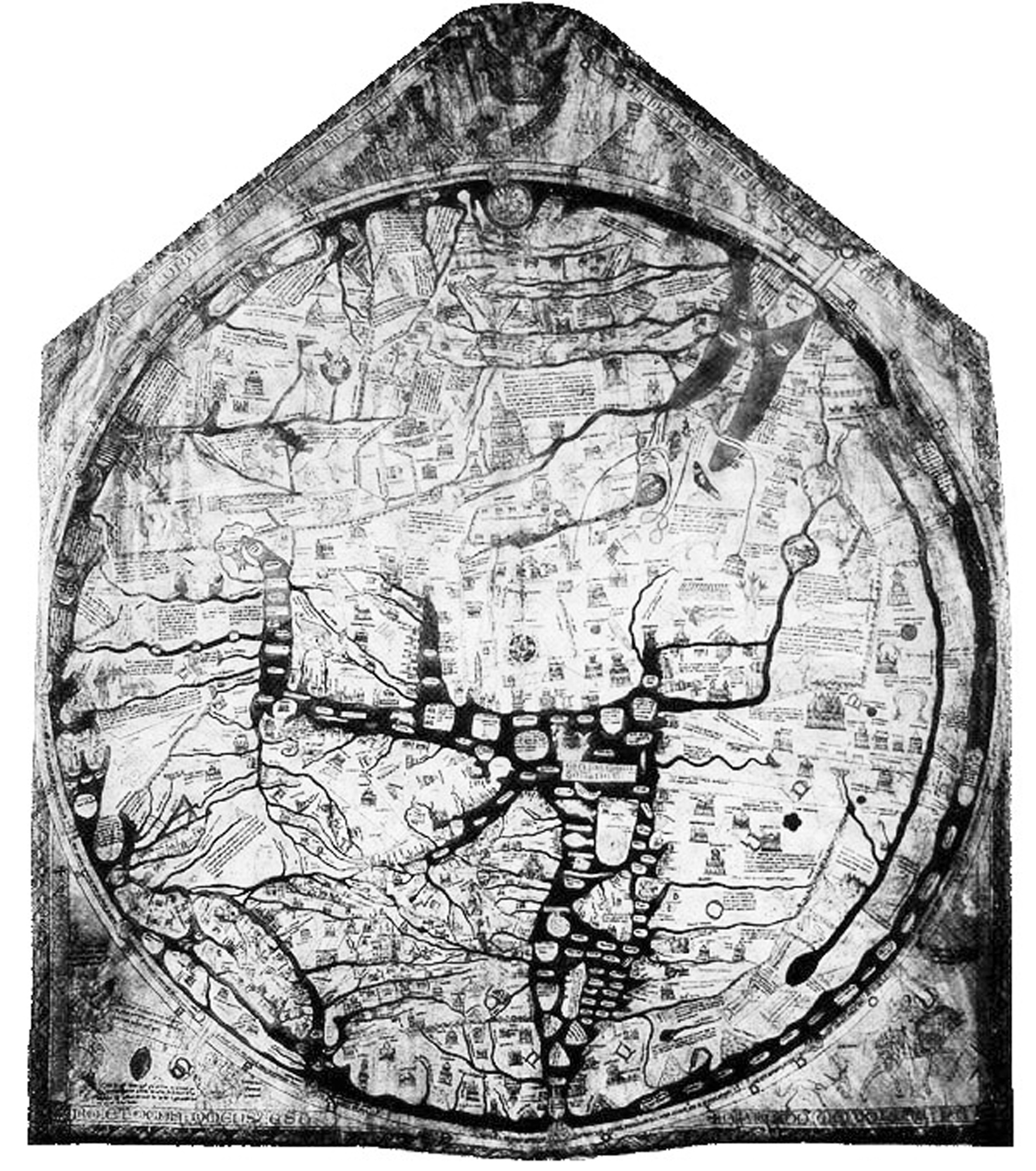
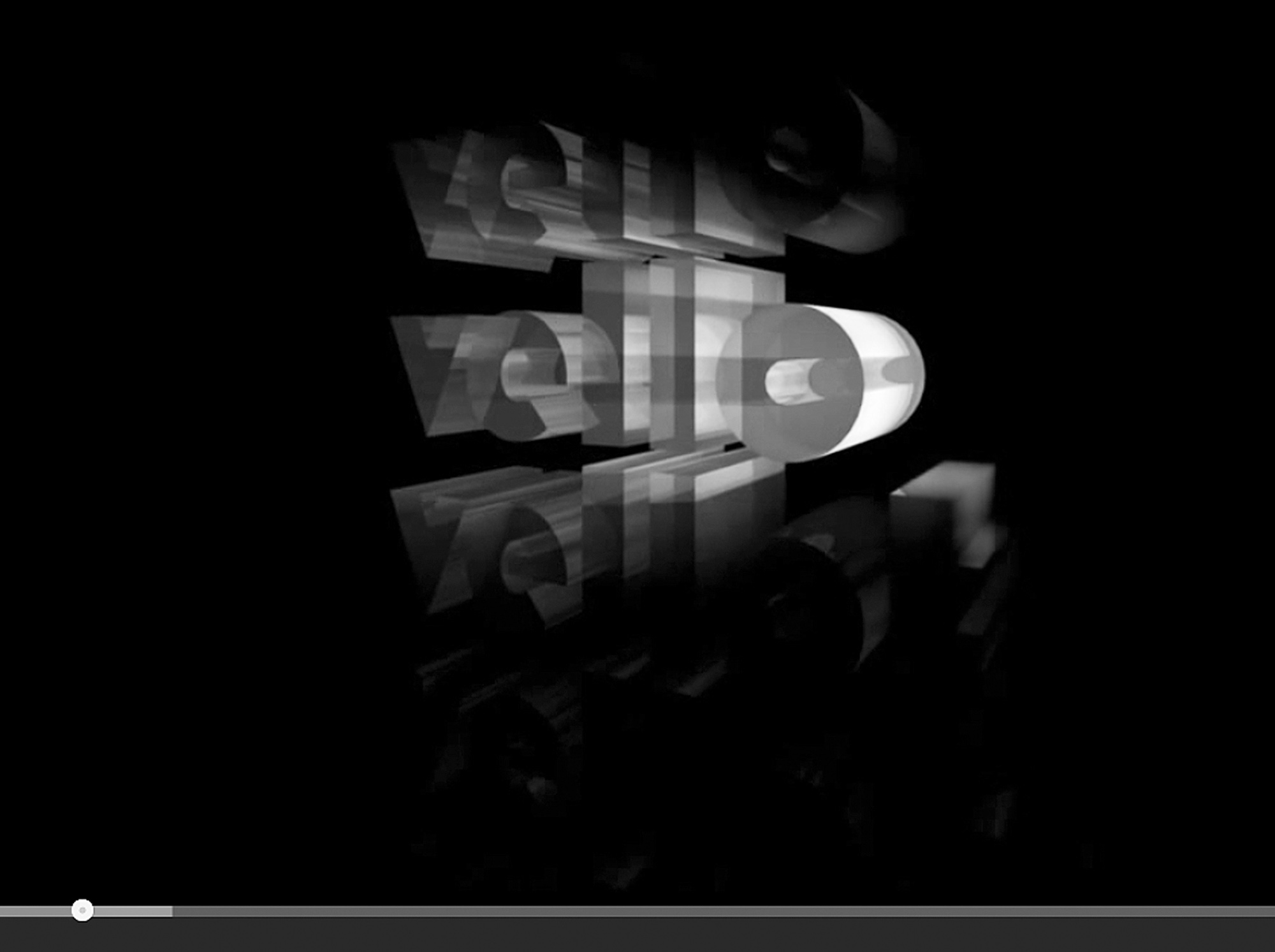
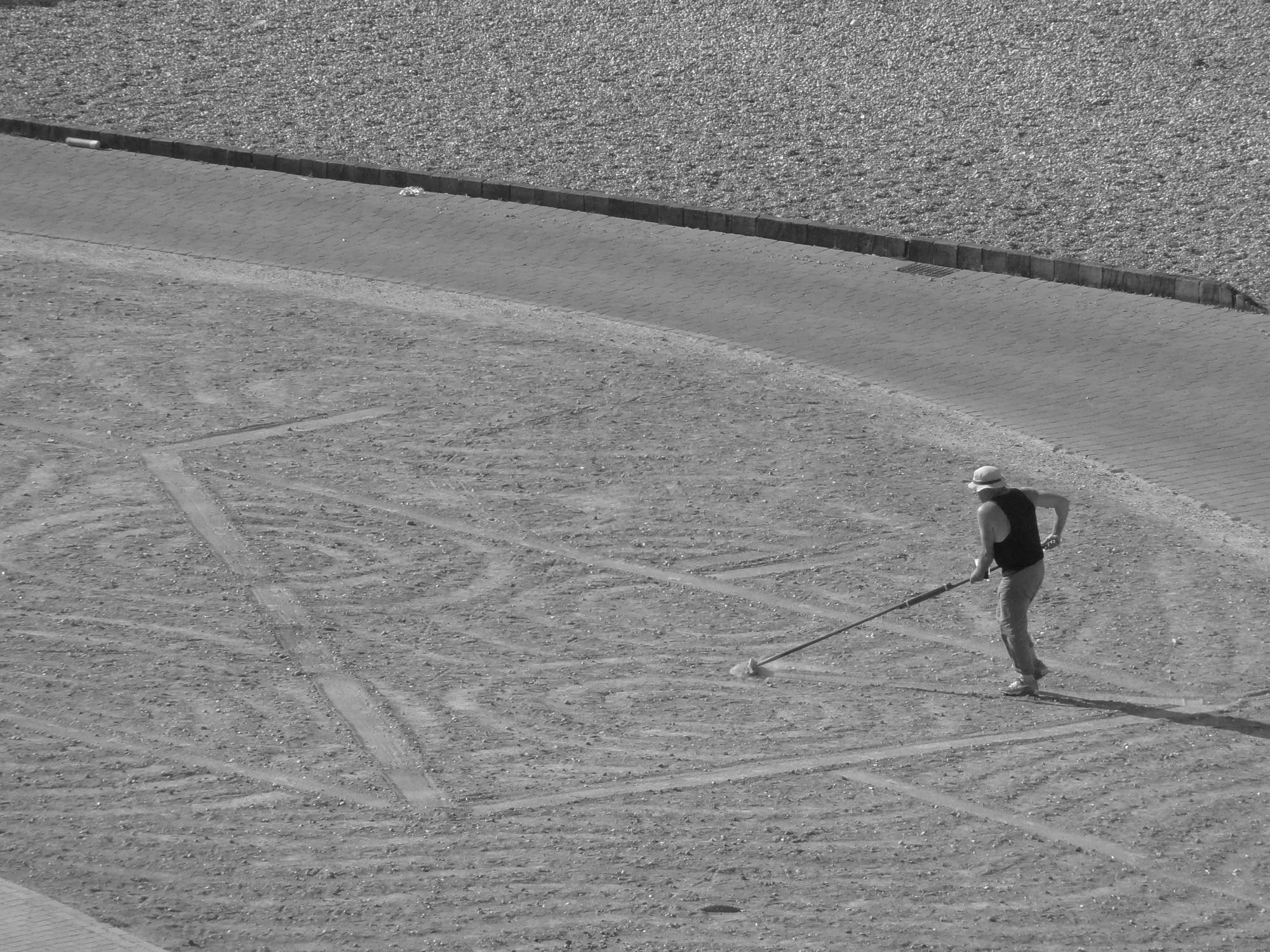
According to graeme Brooker, interior architect, educator and writer-researcher, the design of cities and their buildings, their interior spaces and objects, increasingly requires a very ‘particular awareness’. Brooker highlights and explains this as a fundamental quality which needs to become an inherent part of an understanding of broader contextual issues related to space-making and interior architecture, along with the utilisation of a series of specific processes. These will be ‘employed by the designer in an attempt to filter and synthesise a potentially chaotic mixture of information, ideas, strategy, and resources, into a clear and meaningful design.’16 Brooker assigns a requirement of a ‘specific sensibility’ to these processes and forms of design activity exercised through awareness of existing contexts and a willingness to accept, edit and reform existing patterns of occupation and use: ‘The motivation to critically reflect upon particular contexts requires the evolution of a particular sensibility or responsiveness on the part of the designer’.17
The re-processing and re-editing of what is already extant could be considered to be a dominant form of future cultural production.18 for Brooker, this acknowledgement has serious implications when considered as an underpinning element of the design methodology in a world of finite resources.
Making sense of existing objects, sites and conditions, and incorporating them into something new calls into question a number of existing paradigms. The reuse of what already exists questions the authority of the author and renders ambiguous the notion of the original.19
16 Graeme Brooker, ‘Design futures: The grid – A transdisciplinary Education’, Knowing (by) Designing (Brussels, 2013).
17 Ibid..
18 Nicolas Bourriaud, Postproduction. Culture as Screenplay (Lukas and Sternberg, 2002).
19 Graeme Brooker, ‘Design futures: The grid – A transdisciplinary Education’, Knowing (by) Designing (Brussels, 2013).
Material and its Form: (Re)source and (Re)cycle
‘Material and its form’ is a transdisciplinary project set up by Jüri Kermik as part of the Architecture Programme in Brighton in 2005. Intended as an option to complement crossfaculty extra-curricular choices, it has evolved into an annual project which increasingly utilises the GRID as a generative platform to enable students from different creative disciplines to develop and exchange ideas in the context of form, space and materiality.
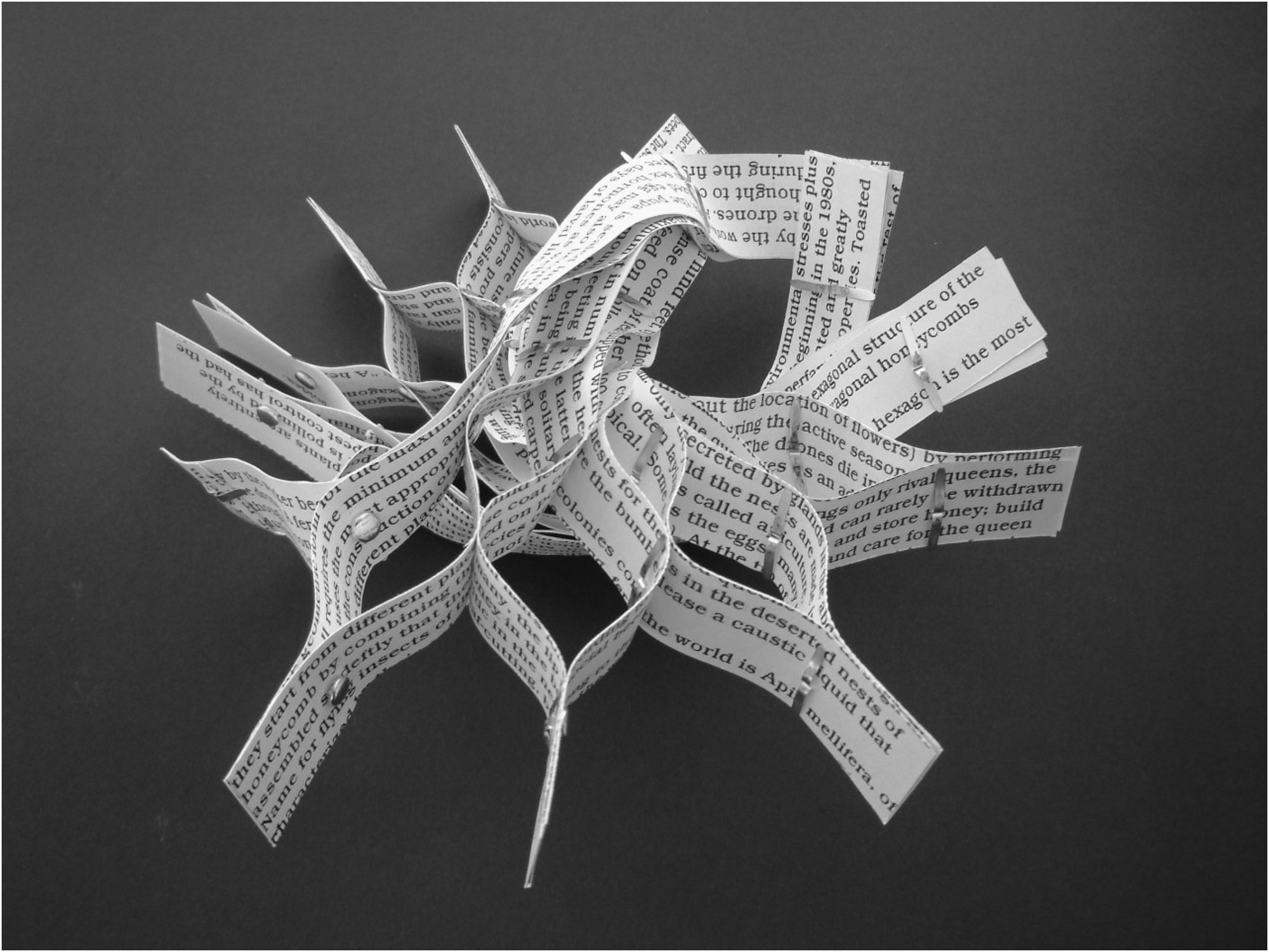
Examples of the variety of investigations undertaken as part of the ‘Material and its form’ project include: narrative as folded four-dimensional spatial construction; scripted landscapes derived from text-based instruction and mathematical code; modular concrete building blocks developed from a set of variables including gravity and flow.
The primary idea of the GRID employed in ‘Material and its form’ is to provide students with no making or material skills with an entry point into the material world and to help them to close the gap between conceptual speculation and reality. here, the gRID provides space for both the framework and substance of the investigation to ensure that design decisions are evidence based, (re)traceable, and (re)readable as narrative. The dynamic nature of the gRID-based development traces imagination and decisionmaking in a feedback loop, progressively moving closer to a clearer formulation of the design brief, its aims, bespoke methodology and the intended design outcome.20
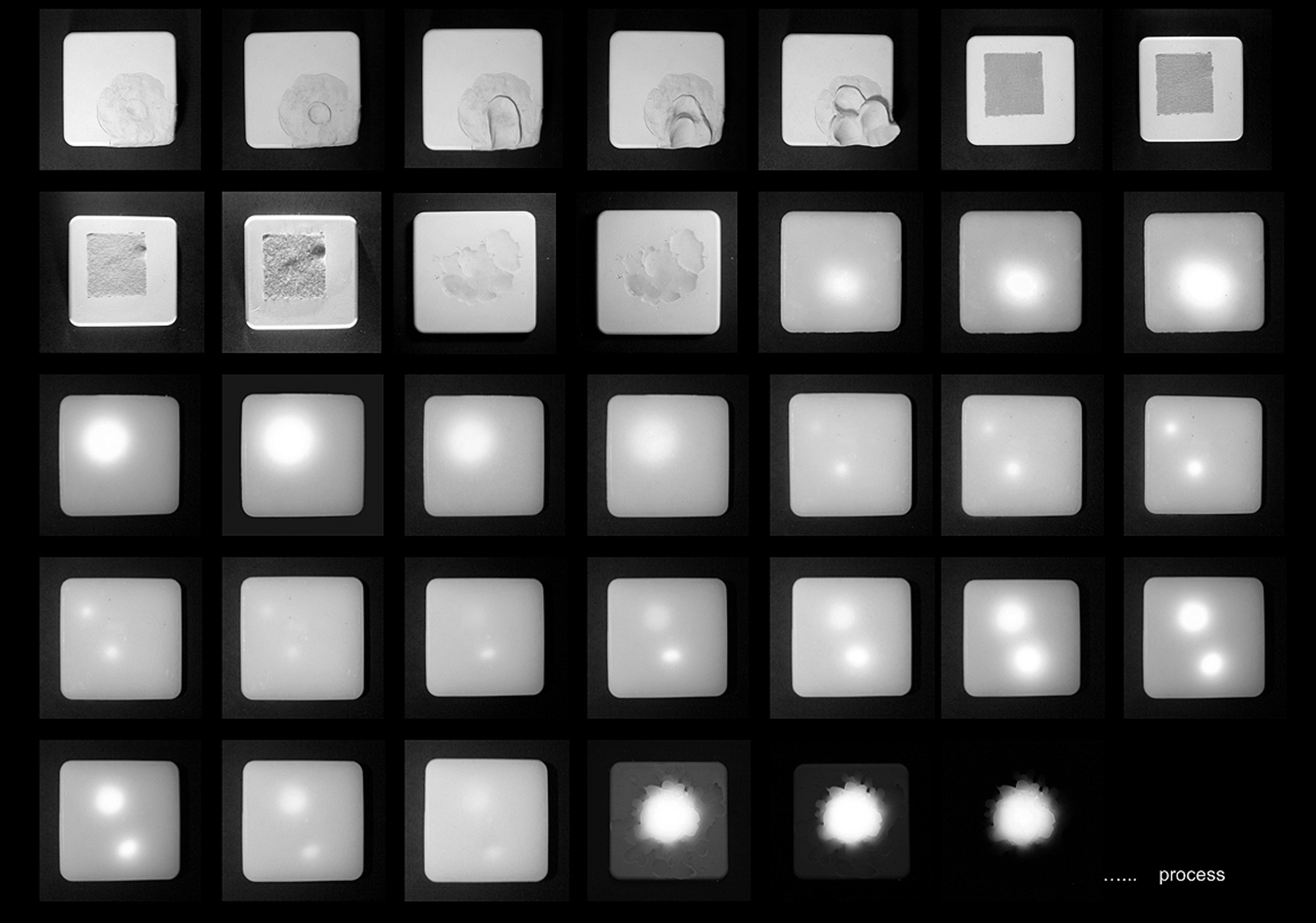
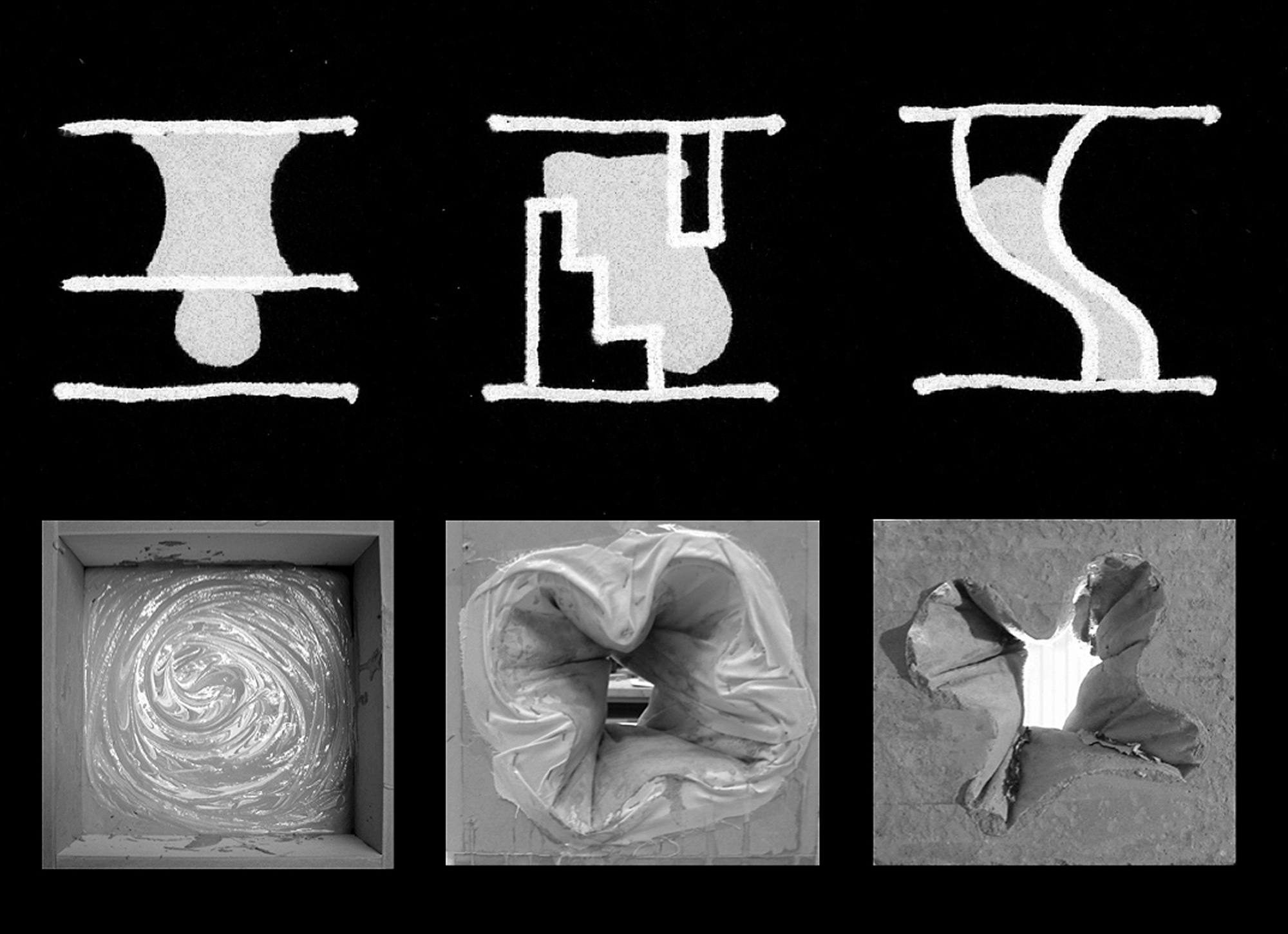
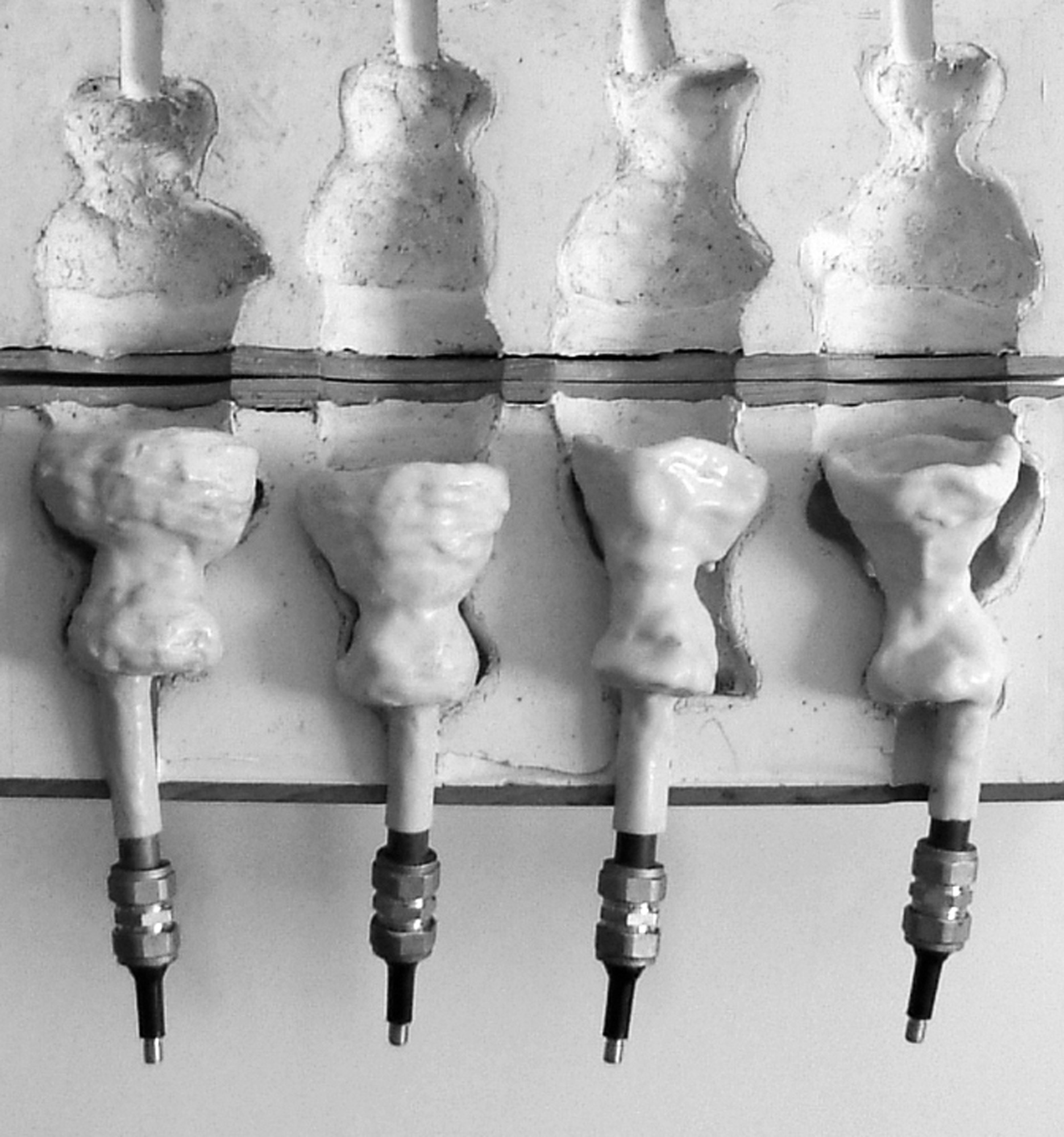
For example, the Liquid Stone project, involving ‘Material and its form’ students in 2008, evolved through a systematic process of examining the potential variables and values relevant to the production of modular concrete building blocks. Variables, which were selected and tested in relation to each other before a design intervention was attempted, included: flow – consistency of the liquid concrete, time – speed of setting the concrete, gravity – weight of the mix in relation to the flexibility of the membrane of the formwork, and ways of achieving particular colour and texture.
Variables selected by students were subjected to experiments and considered for their potential visual and material qualities in relation to other parts of the system the GRID in order to record and archive both predictable and unpredictable outcomes and to finalise the set of variables for the final casting.
Each individual project pathway becomes unique through the creation of the map with a set of variables drawn from (or added to) it. There are no set formulas or cheats to make shortcuts. Escape routes to pre-determined answers, which may have existed before the question (or the design brief) was formulated, are eliminated by establishing the rules and parameters of the GRID. Starting the project by mapping the territory as a GRID, and by doing so also articulating the problem and the research question, becomes a process of development and creation itself – with a promise of finding an answer already programmed into the code of the question.
As demonstrated and experienced through the development and employment of the GRID, diverse disciplines are able to come together to search for a common language that allows them to communicate and develop shared design methodologies in order to collaborate across previously inaccessible areas of domain-specific knowledge.
The conceptual model of Design futures positions the search for transdisciplinarity at the centre of its curriculum to encourage students (learners) to become ‘researcher-designers’ able to envision, locate and articulate new contexts and collaborative formations for professional design practice.
20 Jüri Kermik, ‘Design futures: The grid – A transdisciplinary Education’, Knowing (by) Designing (Brussels, 2013)
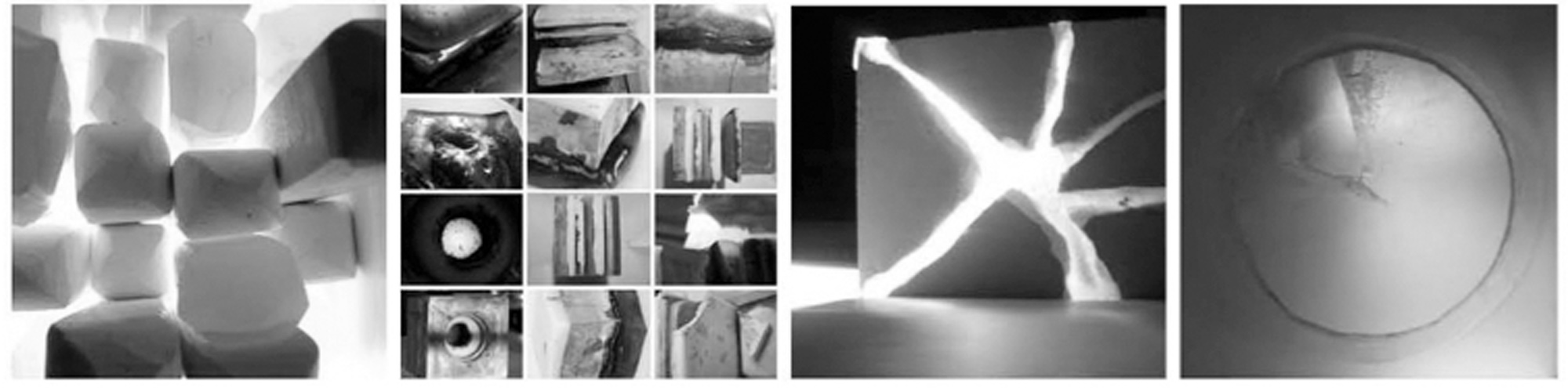
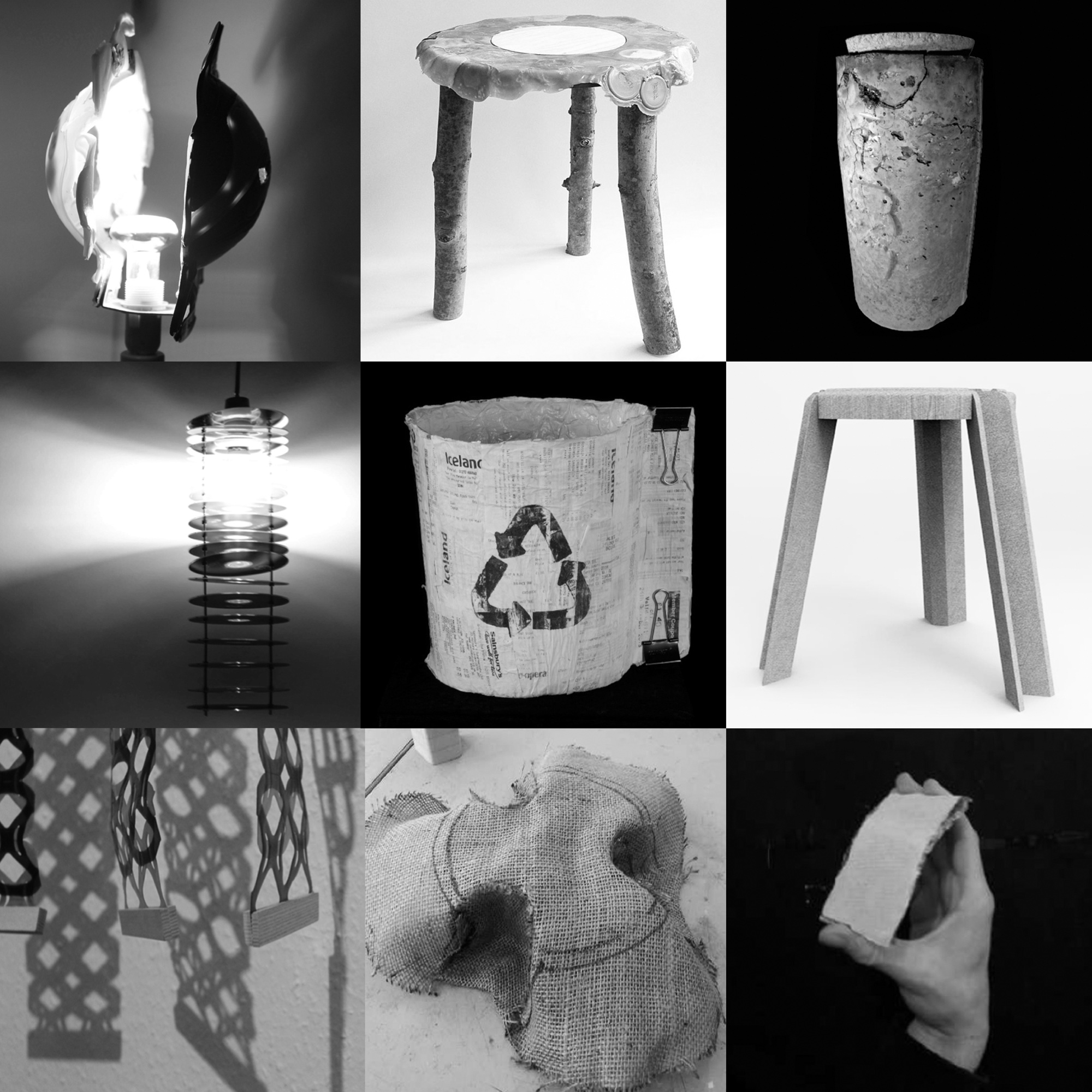
working with materials considered as waste. Common nodes and parameters, which informed the outcomes of the project, included: re-use, regional, added value, production with limited resources and energy.
Conclusion: Inside View
How can design education respond to new opportunities but also to challenges of complex social, political and technological issues? How does it take the best from building a balance between the cognitive style of learning, which is taught and often ring-fenced in traditional art school disciplines, and the more open and universal theories of design thinking to capitalise on innovation in design as an interdisciplinary organisational resource?
Prevailing educational models of rigid discipline frameworks with prescribed skill sets leading to professional pathways are becoming too limited to be able to keep up with demands and complexities of the industry. They also have increasingly limited capacity to contribute to the advancement of design theory and thinking21. There is a general agreement among academics and industry practitioners that design education needs to start addressing design challenges more comprehensively and work across disciplines: ‘Students are beginning to move from solo self-expression to teamwork with emphasis on business knowledge, ethnography, technology and environmental science’22.
Parallel to this is the acknowledgement that the essential set of foundational skills in design needs to build on communication (written, visual and oral), articulation of ideas and reasoning, including languages and storytelling. Innovation will increasingly become the most important driver requiring integration of design in the business process, from business model exploration to innovation management. Design thinking will be the enabler and will be combined with open innovation and crowdsourcing, and applied co-design as well as cocreation’ 23.
21 Lucy Kimbell, ‘Rethinking Design Thinking’ Design and Culture Vol 3, no 3 (Berg, 2011).
22 Soren Petersen and Rob Curedale, Innovative Thinking in Design Education (2012). www.huffingtonpost.com
23 Ibid..
Pedagogy: Post-disciplinary Curriculum
Design Futures proposes to build on those essential foundational skills to develop an understanding of principles and methods which are teachable, comprehendible and repea table as ‘creative activities that actively generate intellectual value, and they are unique to the discipline of design’.24 Pedagogically, the distinguishing element of the Design futures educational framework is to provide a dynamic and questioning environment that will capitalise on the distinctive and integrative strengths of design education to develop new formations of knowledge and ways of learning and researching. Design futures aims to equip students with the creative and intellectual independence to explore their chosen pathways and the interrelationships with other fields of knowledge within and beyond different forms of creative practice. Commitment to learning is communicated as a shared colla borative process that includes both students and staff.
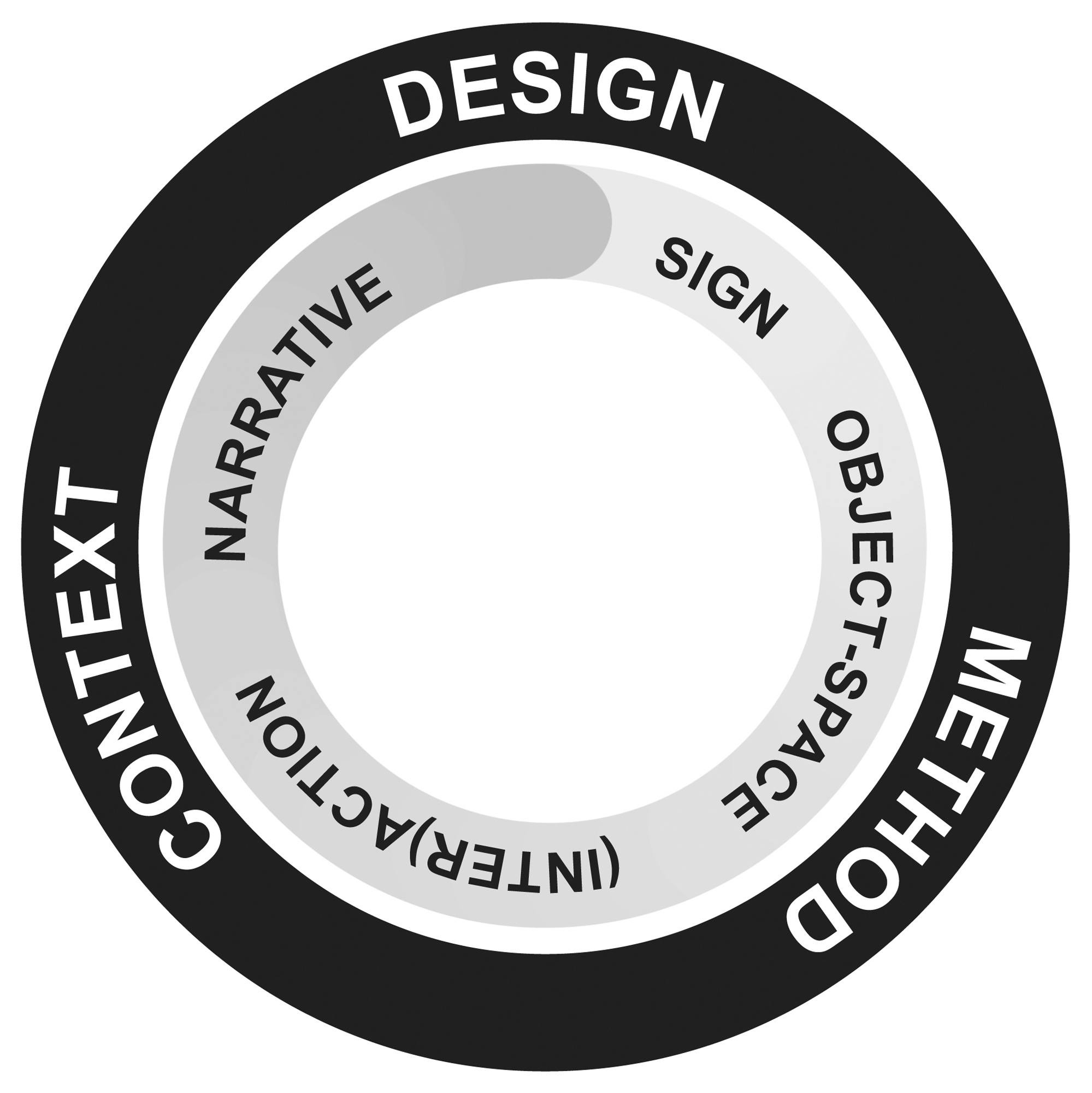
Research and the articulation of design thinking exercised through the practice of Design Synthesis aims to move progressively from internal and personal (hidden) to collaborative and externalised (articulated and visible) process. Design Synthesis is a vital educational stage in the learning process where Context, Design and Method (see Kermik & Brooker, diagram of the curriculum model) are brought together into an integrated portfolio output. Bringing individual and team contributions to the critical discourse and the shared archive of resources at the core of their educational experience engages students within scenarios of locating, articulating, and visioning the place of professional design in the world. Central to the strategy of extending sites of design expertise (from personal to shared) and activity from the discipline base to the wider and open-ended range of thematic specialisations, including well-being, healthcare, manufacturingmarketing etc., is the way of closing the gap between traditional design disciplines grounded in cognitive methodologies and new evolving models of post-disciplinary design thinking25.
Through an appreciation of the implications of the discourse of design thinking and the ‘turn to intensive, socially determined dynamics, it becomes clear that the new design school must be concerned with educating the practitioner to become a researcher’ – in that they are able to apply method to the analyses of situations or phenomena to be addressed.26 This is then the development of an approach that will allow practitioners to establish an explicit methodology prior to what has traditionally been understood as the design process proper. It is also to equip them to extend critical analysis further than has been standard practice to include an appreciation of the effects of design27.
As exemplified by the generative function of the GRID, students will be supported and able to learn to evolve and ‘articulate problems before they make any attempt to provide anything that may constitute a ‘solution’, just as they must be able to see that any design is also a new starting point’.28 In this way the educational intention is to make the methods of design practice and research visible and comprehensible and establish an enhanced flow between personal (internalised) learning and shared (externalised) experience29.
Models of external engagement exist, which involve students in live projects, in which they learn through practice and the interactive modes of practice of working with community groups, local government and the industry. It can also be demonstrated that it is possible for design academics, practitioners and researchers to frame research thematics and by developing funded institutional strategic strands to engage directly with the students’ educational experience. The challenge is how to combine such approaches into an ‘open classroom’ spanning undergraduate and postgraduate teaching, and to balance them within the curriculum, and to run them not as discrete elements of the course, but embed them in the whole process of learning, development and progression throughout the programme.
Regardless of design specialisation, research can become an underpinning factor in the framing of problems, the mapping of context and connections, and the communication and articulation of approaches. The intention, therefore, as with the conceptual model of the GRID, is to establish research as an enabling meta-tool for dealing with complexity, as the curriculum has been built around an integrative ideal, where research, in fact, becomes the connecting link between all the practical study areas (set by Design futures as ‘Context’, ‘Design’ and ‘Method’), which then broadly map onto the research domains of ‘Why?’ ‘What?’ and ‘how?’.30 The role of design has changed profoundly since the excess and recession decades of the 20th century. Its field and scope of intervention has expanded to include the design of ‘processes, services, structures and systems, and to the creation and promotion of ideas and principles – in sum, to a series of activities that could be defined as the design of the contexts within which traditional design operates’31. What we see here is a model for 21st century design practice in which the designer becomes as much a facilitator and mediator of others’ interconnections as they are an agent that devises ‘solutions’ for these collaborators32.
In relation to society, industry and production, design is making progress in the critical and positive re-evaluation of its strengths and priorities. These are already decidedly refocused towards user- and experience-driven methods for design development and innovation guided by relevance and social responsibility. The quality of the intervention and design output emerges from the depth of professional integrity and readability from the perspective of different disciplines.
Design Futures, with its ambition to define and extract useful generic elements of collaborative design processes and practice by combining these into one curricular experience, is not a weakening of specialties, but instead it profits from the effect of its transdisciplinarity to bring a new sense of what a designer is educated to become.
24 Jon Kolko, ‘Abductive Thinking and Sensemaking: The Drivers of Design Synthesis’ Design Issues Vol. 26, no.1 (2010).