Tom Callebaut
Sacred Spaces as a Medium for Connecting People in their Search for Spirituality
A Society in Motion
The decrease in the number of churchgoers and deserted monasteries pose challenges for many policymakers in flanders1. At the same time, there is a growing need for new spiritual approaches. Secularisation is much more a story of social change rather than of fading2. Little attention has been paid to the opportunities multiplied by these changes.
1 Judith De Waele, From secularization to disclosure (free University of Brussels, 2013-2014), 11.
2 Patrick Loobuyck, The secular society, about religion, atheism and democracy (houtekiet, 2013), 23-25.
Local Identity
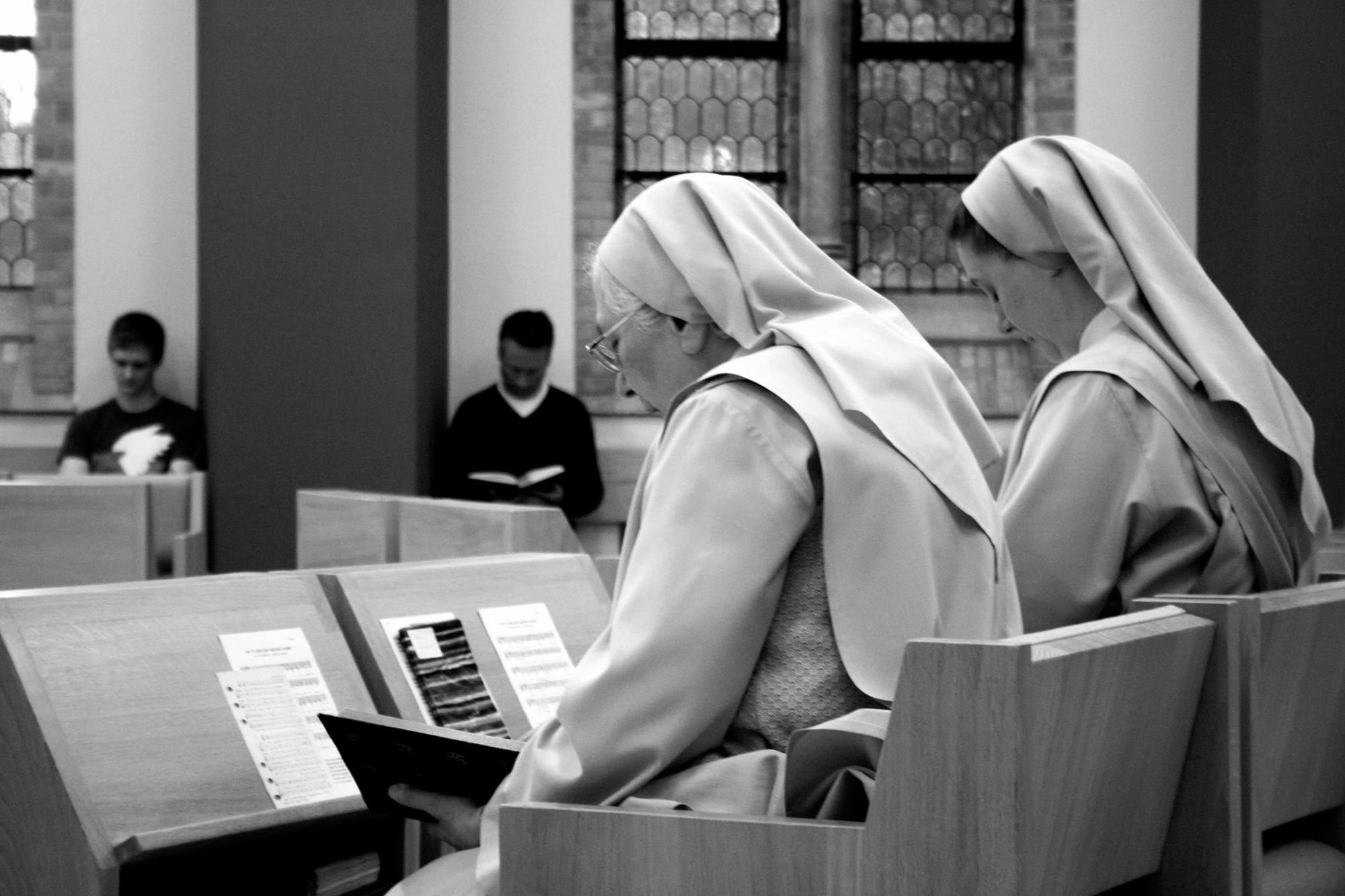
Nowadays we live in a fascinating era of spirituality. Different generations live together: the religious 80-year old, the for-and-against 60-year old, the annoyed 40-year old and the astonished 20-year old. At the same time, we live in a social blend of different (religious) cultures. Based on this diversity, various local and spiritual initiatives are growing.
Stone in the River
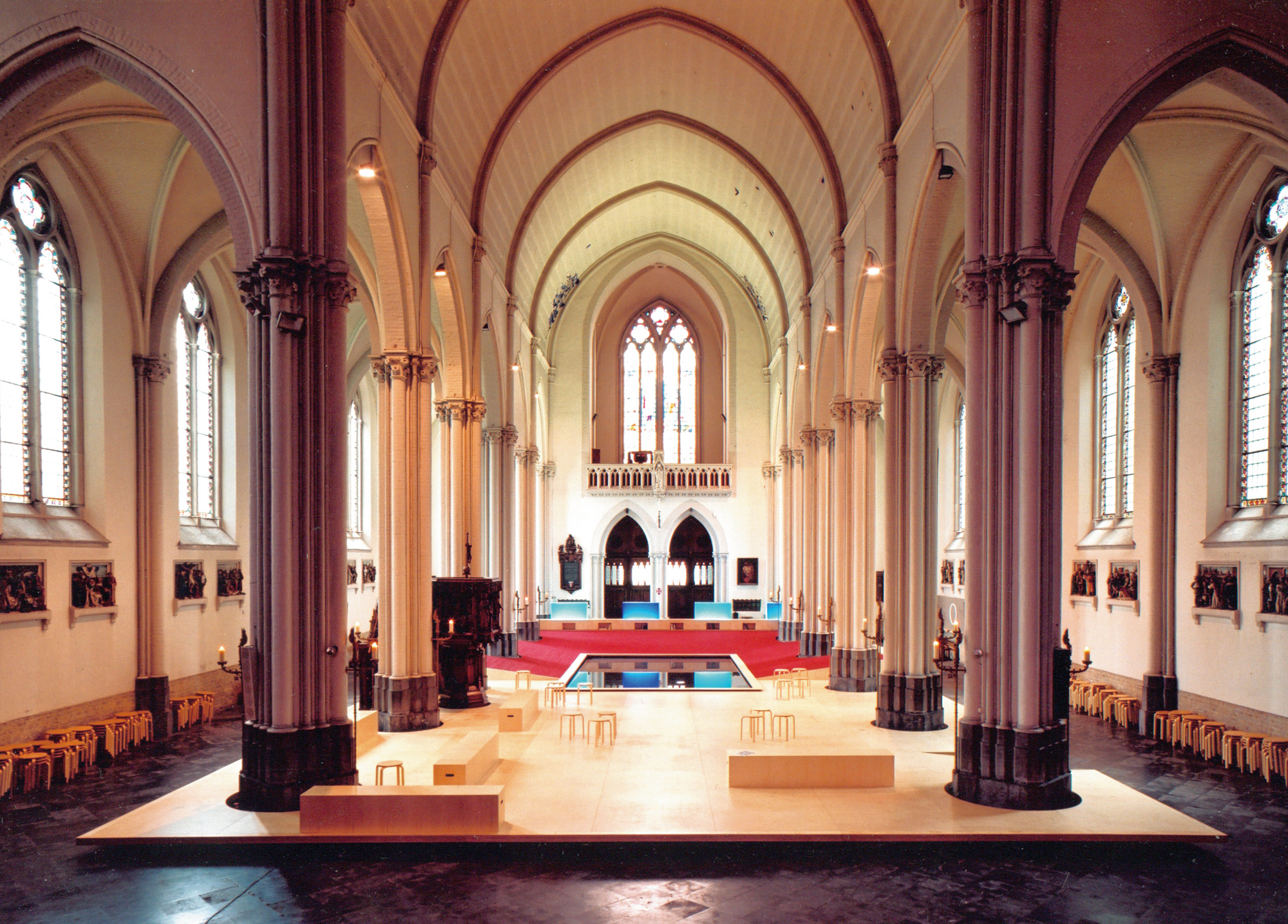
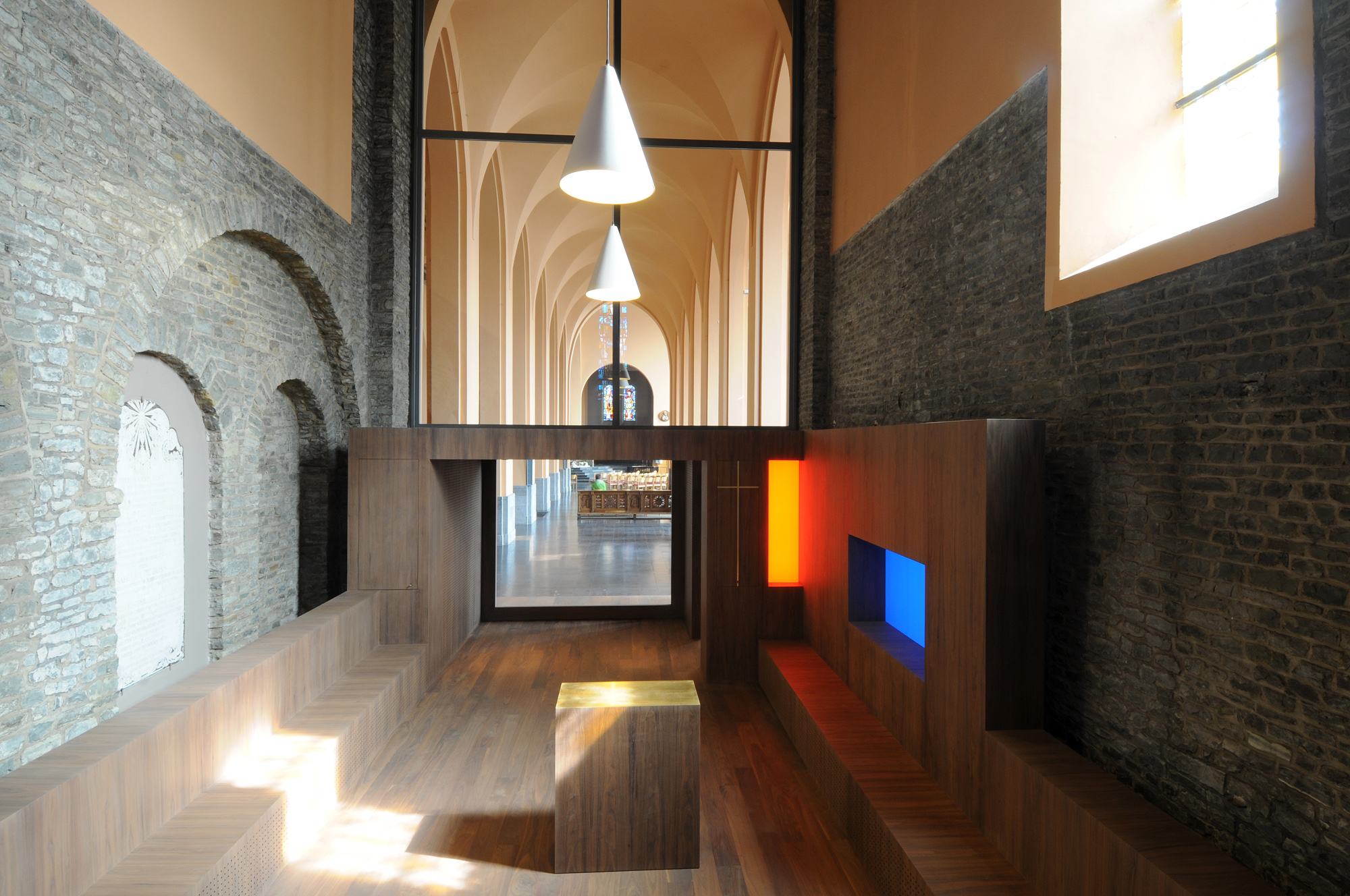
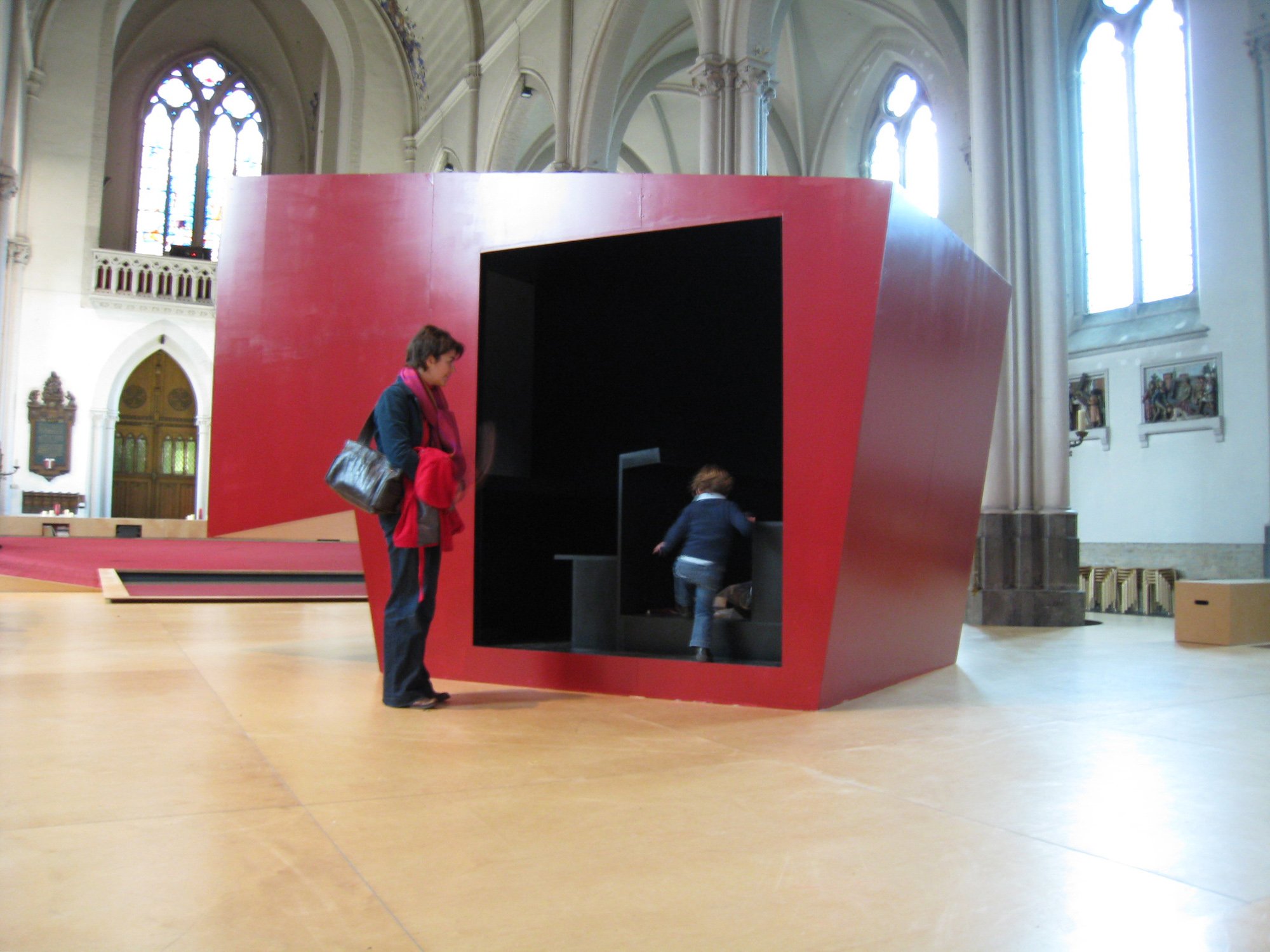
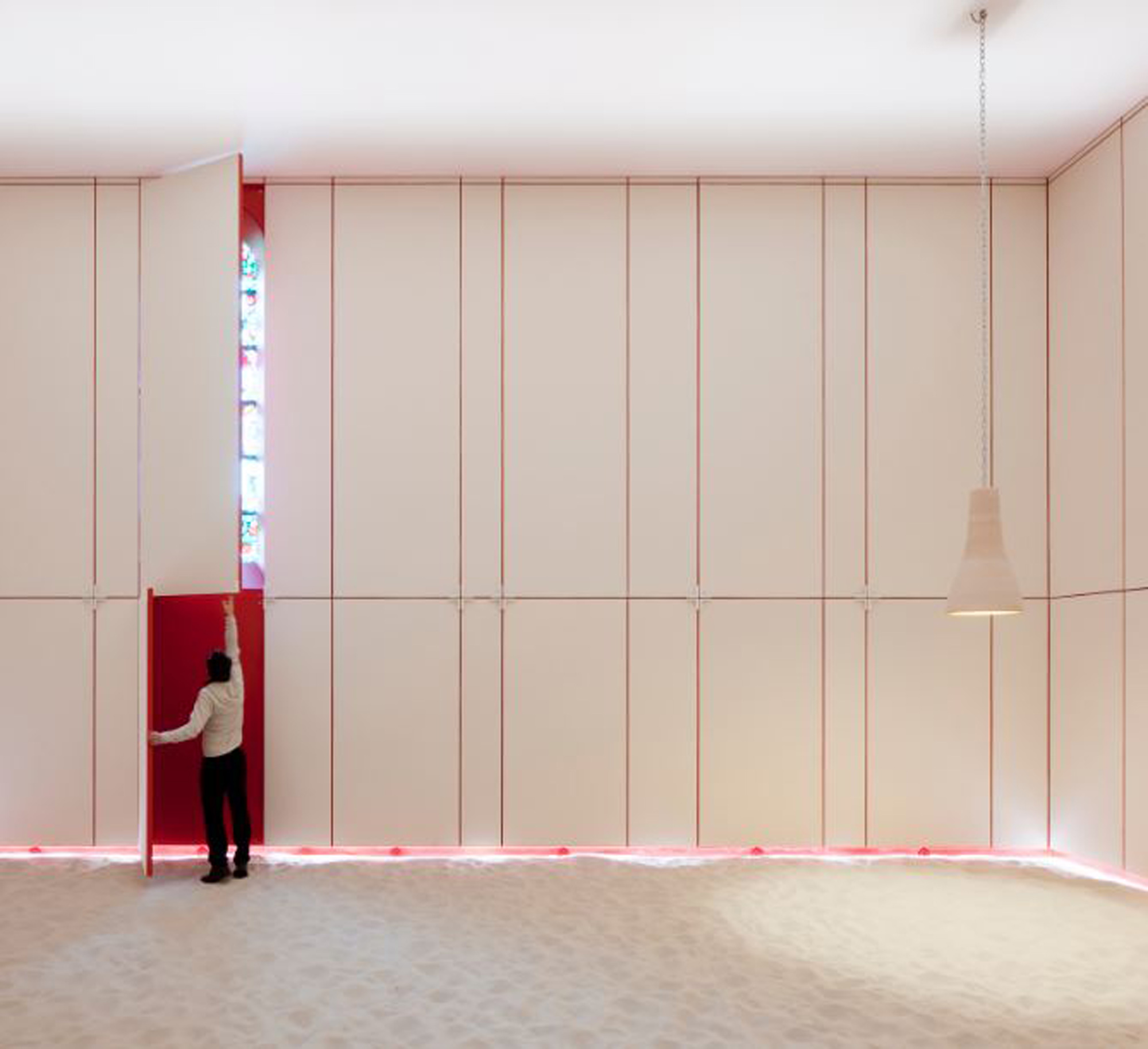
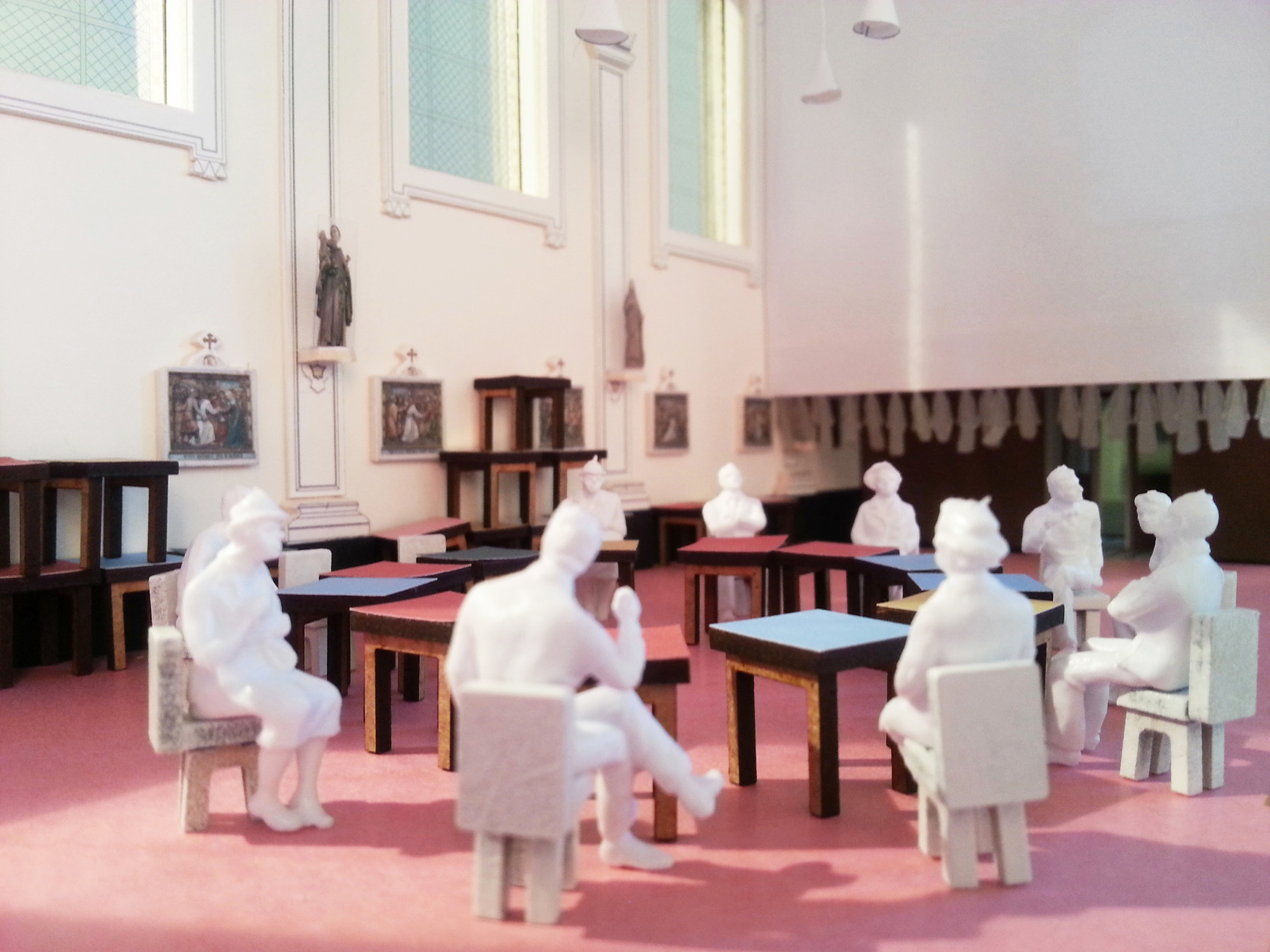
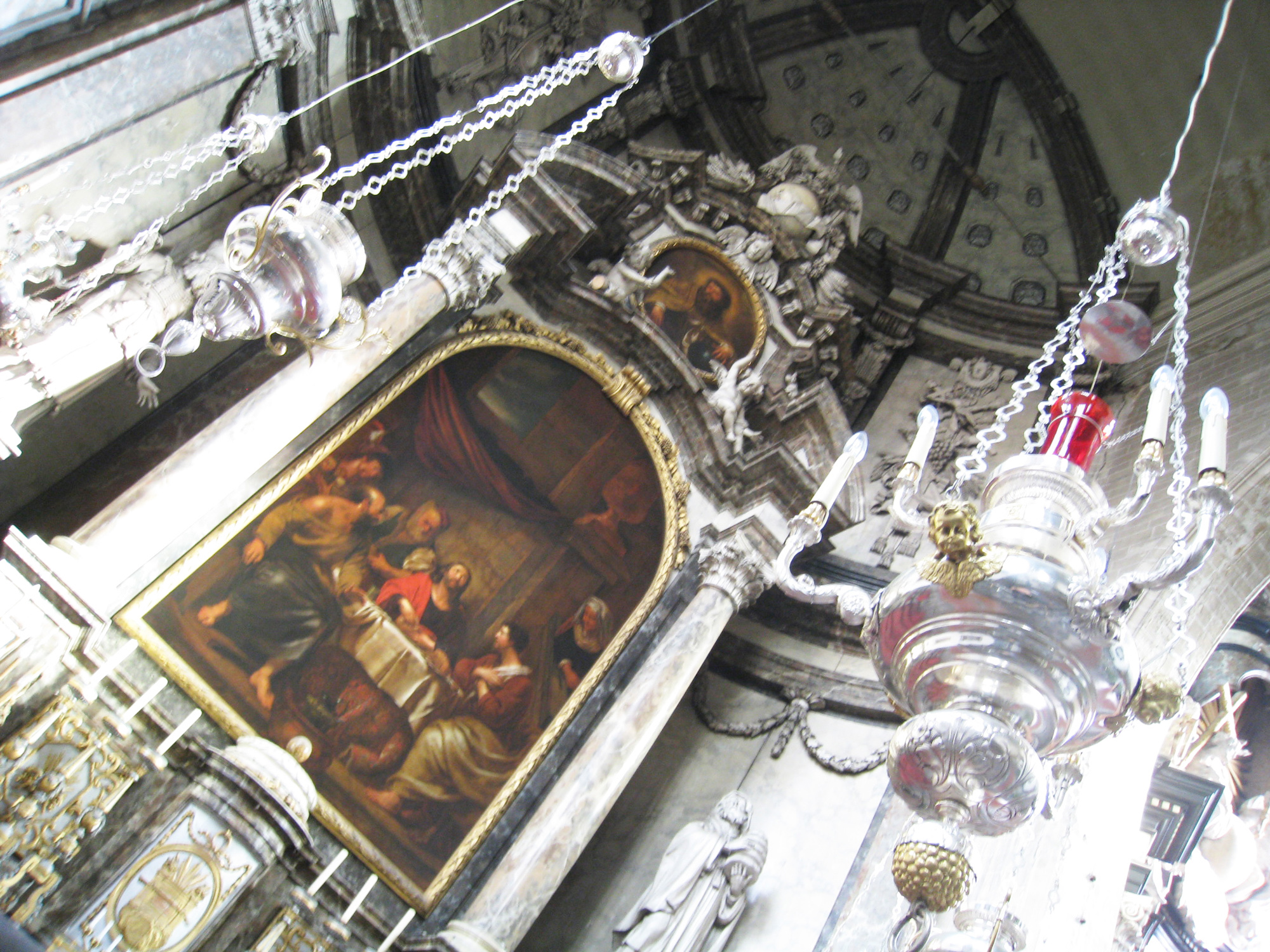
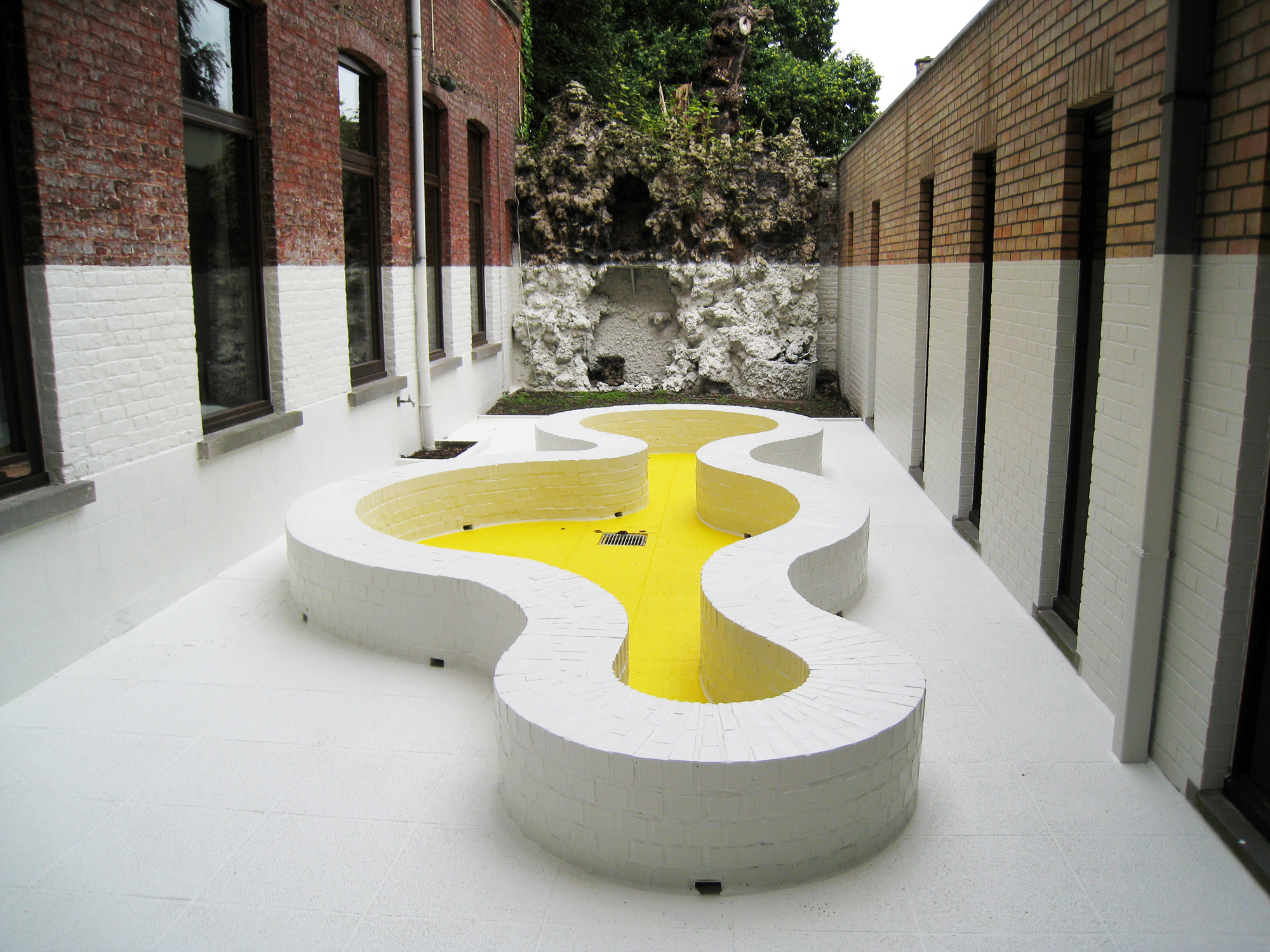
The YOT reorientation of the neo-gothic Magdalena Church in Bruges was a Flanders pilot project in 2002. (design: tom Callebaut and Stefaan Onraet). YOT3 has been a human, spatial and spiritual experiment, opening the church to more target groups and more different activities. It has triggered reflection on the future of our religious patrimony and the search for spiritual freedom. In the meantime, YOT has become a reference work. Since YOT, tom Callebaut has been involved in thirty or so research and design projects of sacred spaces.
3 Gerard Rik, Madeleine, Madeleine (halewijn, 2002).
Man, Space and Spirituality in Trialogue
‘tcct’ always fits the transformation of a sacred space within a broader context of social and local changes. Customers are always invited to engage completely in the whole process of changing man-form-spirituality4. Better results are achieved when those three dynamics reinforce each other instead of blocking the process, as often happens.
4 Sofie Verscheure and tom Callebaut, A future for churches, a monastery in the city (Yotb vzw, 2012).
A Suprising Turn
Ten years ago, many were convinced that spiritual interest would only fade and finally peter out.
The youngest generation in its twenties may not be well informed about the centuries old religious tradition of Flanders but they surprisingly do have an open mind and attach great interest to the spiritual dimension of their life. At first, ‘tcct’ was assigned especially to re-activate the existing religious patrimony: reorientation, additional purposes, reallocation, and recently an expansion. today, ‘tcct’ is faced with an ever growing demand for designing new sacred spaces5.
5 Judith De Waele, “Keep the church in the middle”
Retko Verso, December 2014 – January 2015: 46-49.
A Time Period of Questions and Answers
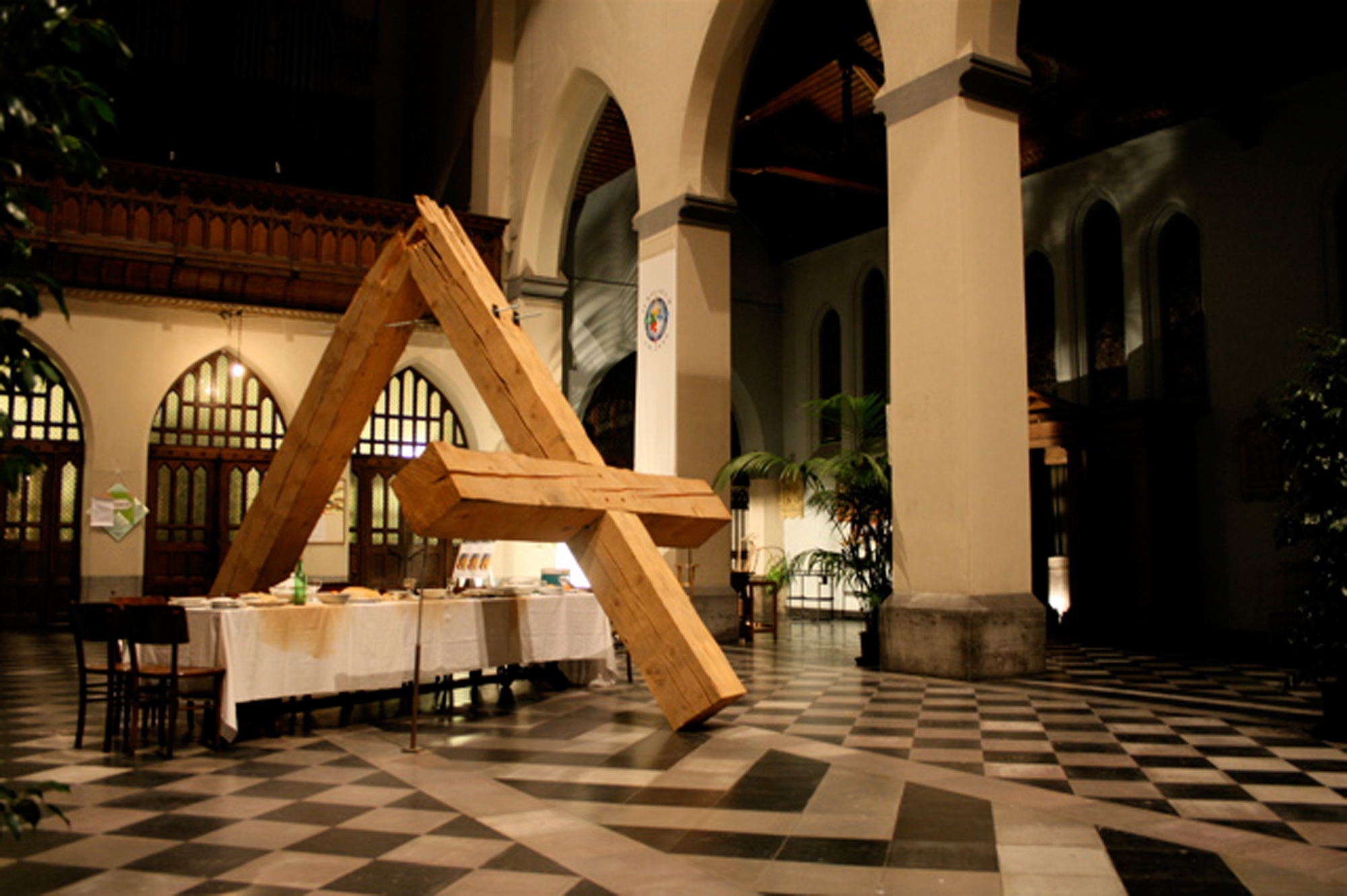
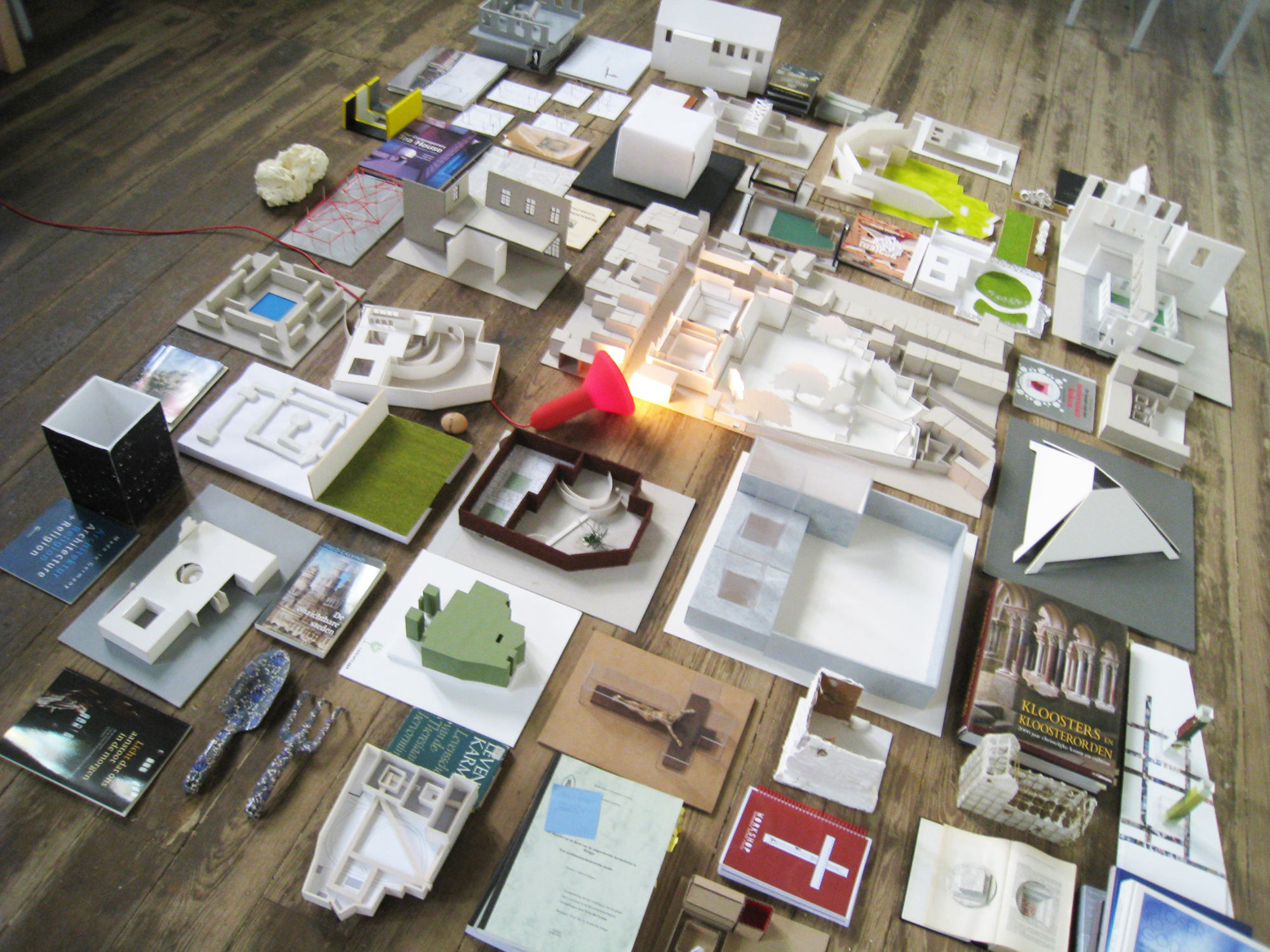
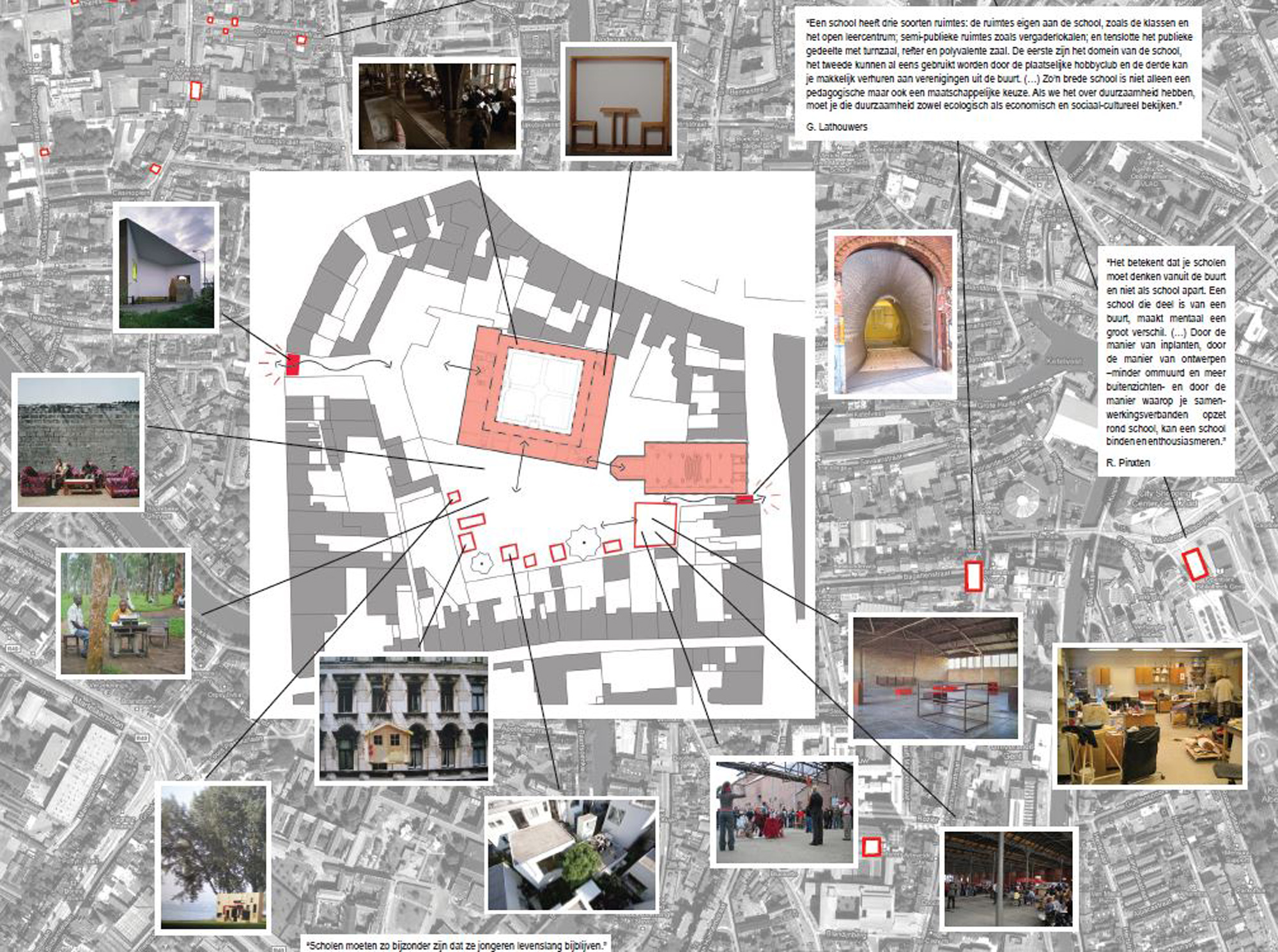
This article introduces the reader to the evolution of design questions and the diversity of spatial answers of the past twelve years. Each project has been developed in a totally different context: another trigger, other financial means, another team, another basis, another geographic location, another social network, another historical meaning…Every project has its own story and value. A horizontal line divides the paper, with projects originating from the existing religious patrimony above the line, and projects created in a totally new context below. from left to right, the projects are arranged according their evolution in time. The larger the presentation of the project, the more influence it has had on research. Projects below the grey screen have never been executed.
Projects are evolving from religious through spiritual to more generous spaces, from spaces of answers to spaces of quest, and from contrasting and separate spaces to more integrated and open spaces.
Research by Design
In 2013, Tom Callebaut started doctoral research entitled Sacred Space as a Connecting Medium for People in Search of their Spirituality at the University Of Leuven (KUL – Supervisors Johan Verbeke and Joris Geldhof). His curiosity concerning possible new kinds of future sacred spaces has triggered this research by design. In this research, architecture is seen as a medium for providing people with the chance to develop their vision and experience of spirituality. This study is a continuous interaction between experiences gained during design practice and insights acquired from research. Process – how does a new sacred space come into being – as well as project – what kind of features does such a new sacred space have – are put under the microscope.
Interior Architecture as a Medium to Discover
The customer of a sacred space design hardly has a programme at the beginning: he feels the need for a different kind of space, but what to do, who will visit, inspire, how long it will take…is often difficult to estimate. That is why ‘tcct’ uses research by design that it has developed itself before starting the design process.
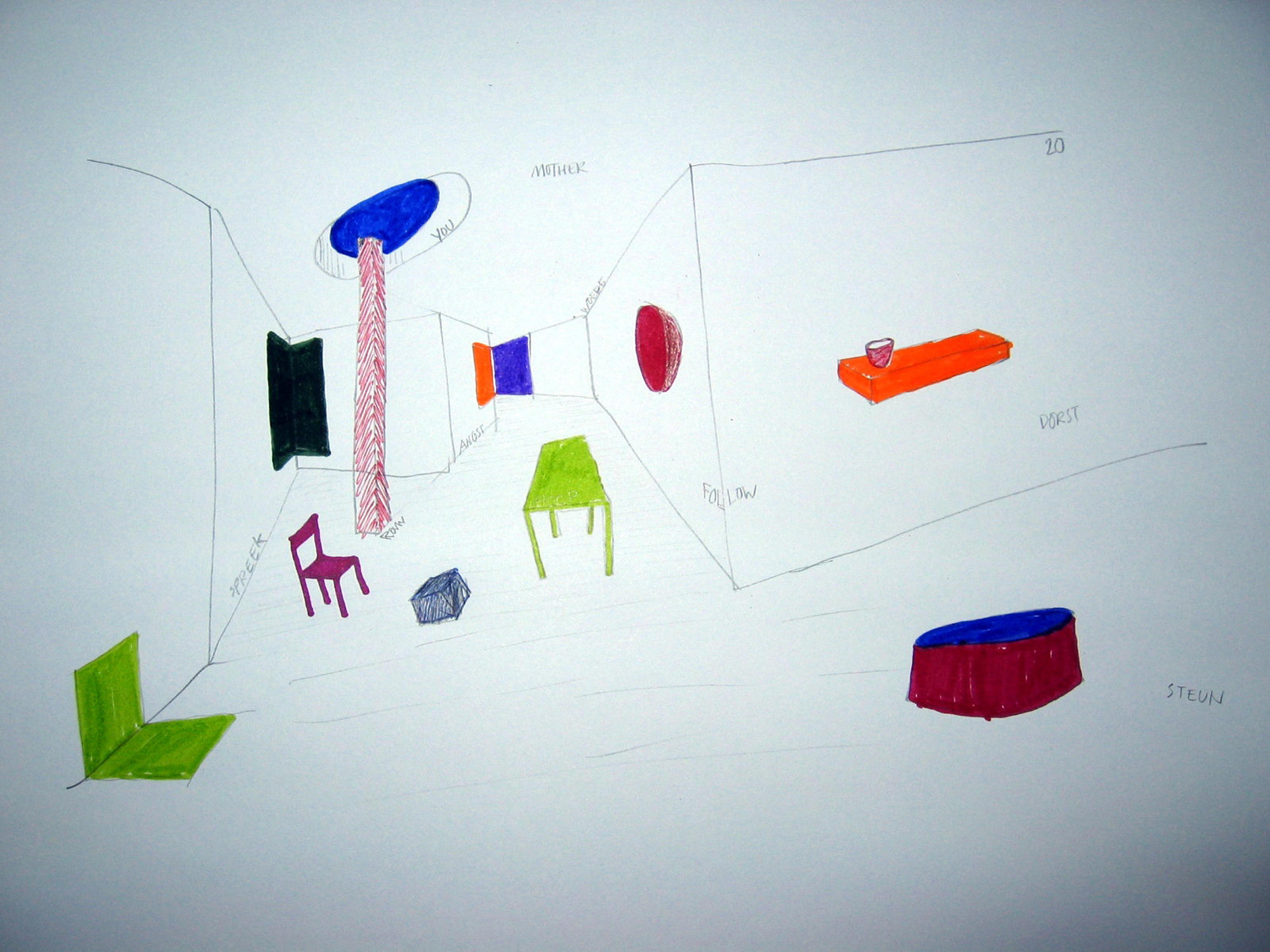
Representatives of all possible parties are gathered together to trans-disciplinarily develop their own new vision. Therefore different (im)possible design plans are considered in order to approach the specific assignment based on various points of view. The customer gradually becomes aware of his wishes, is able to express his vision and basic conditions, and learns how to communicate his design requirements. During this process, all dynamics (man-formspirituality) of the project are taken into account. A challenging and clear presentation of the question is essential to develop a good project.
Interior Architecture as a Medium to Develop
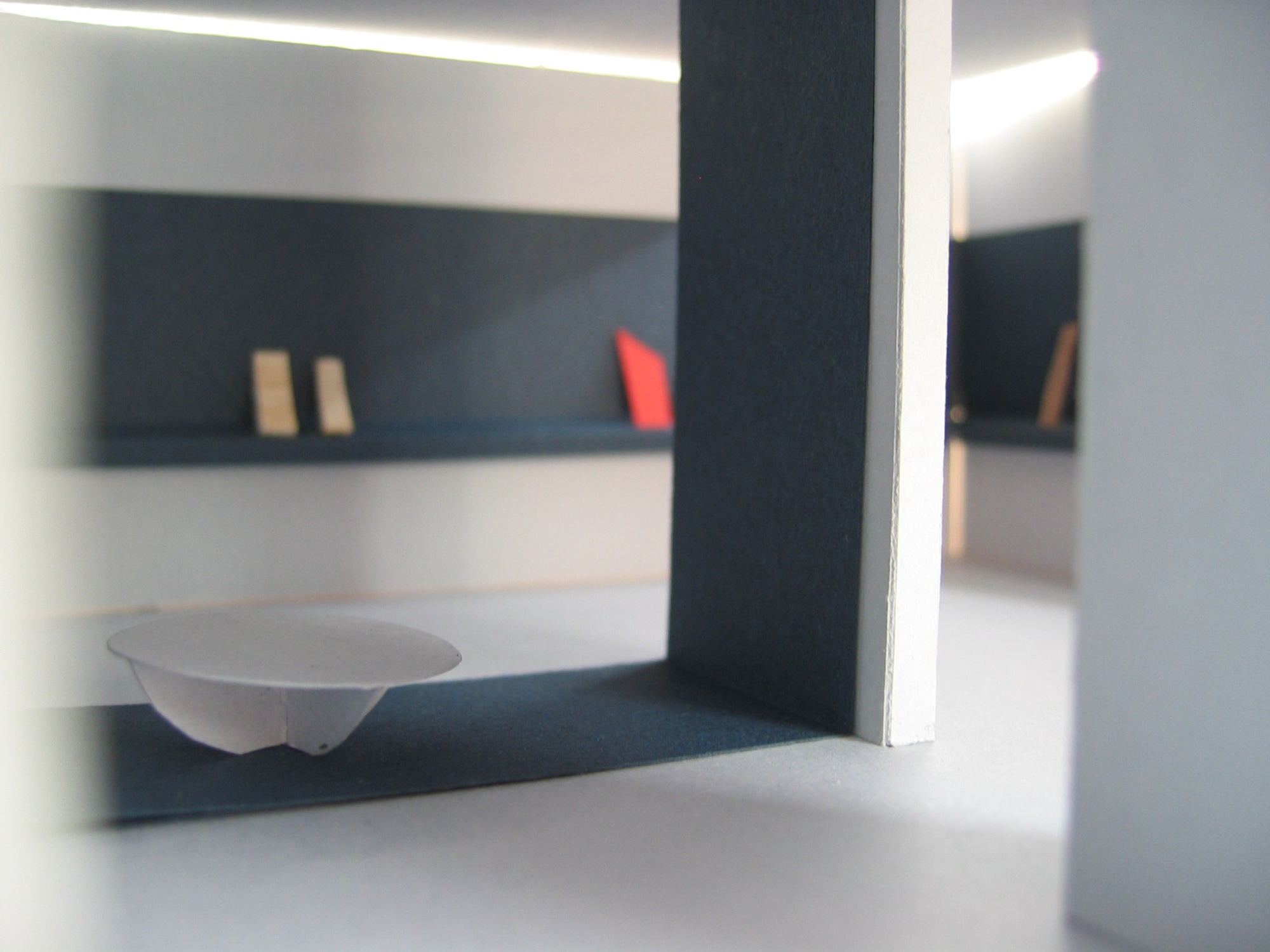
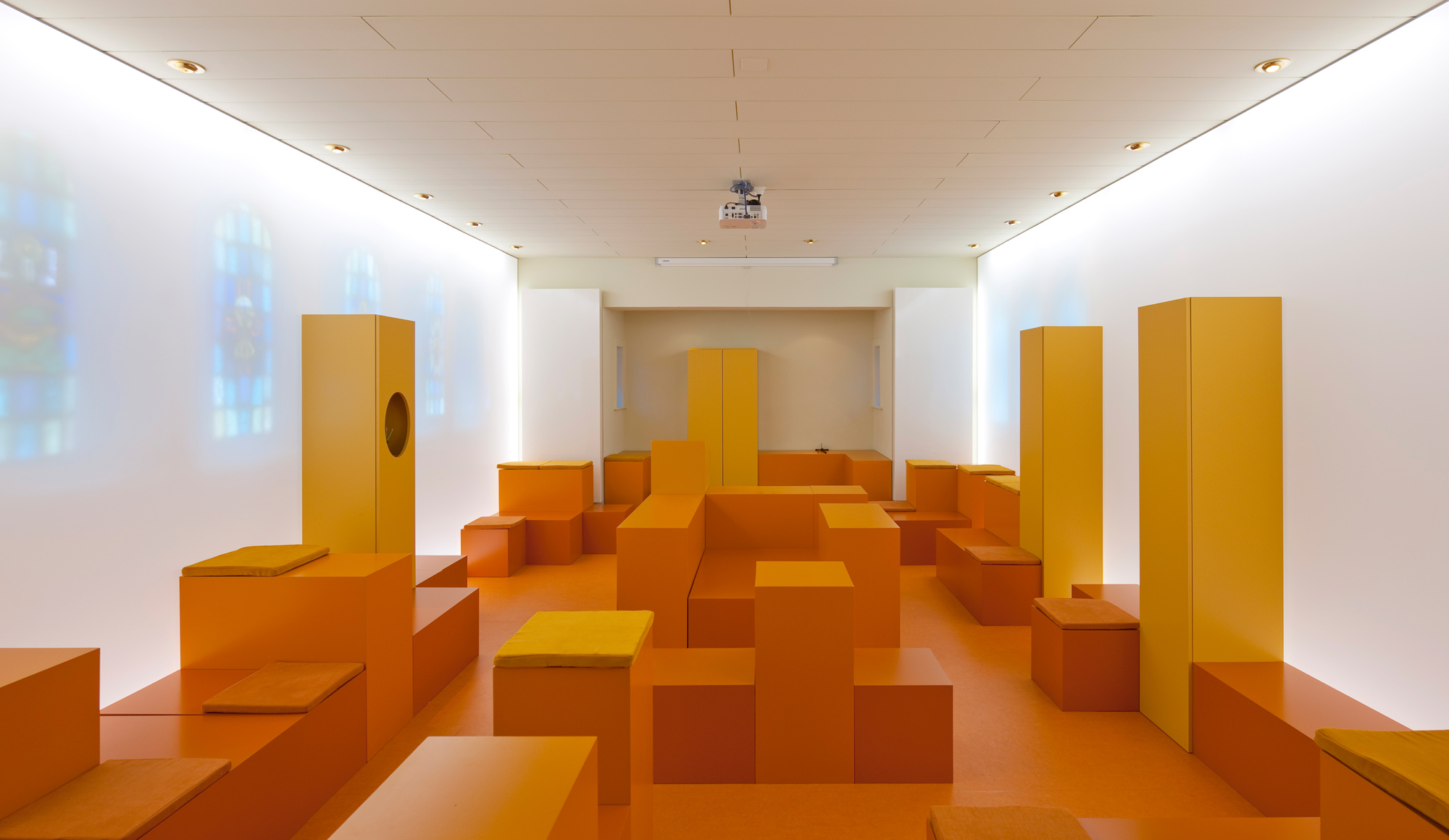
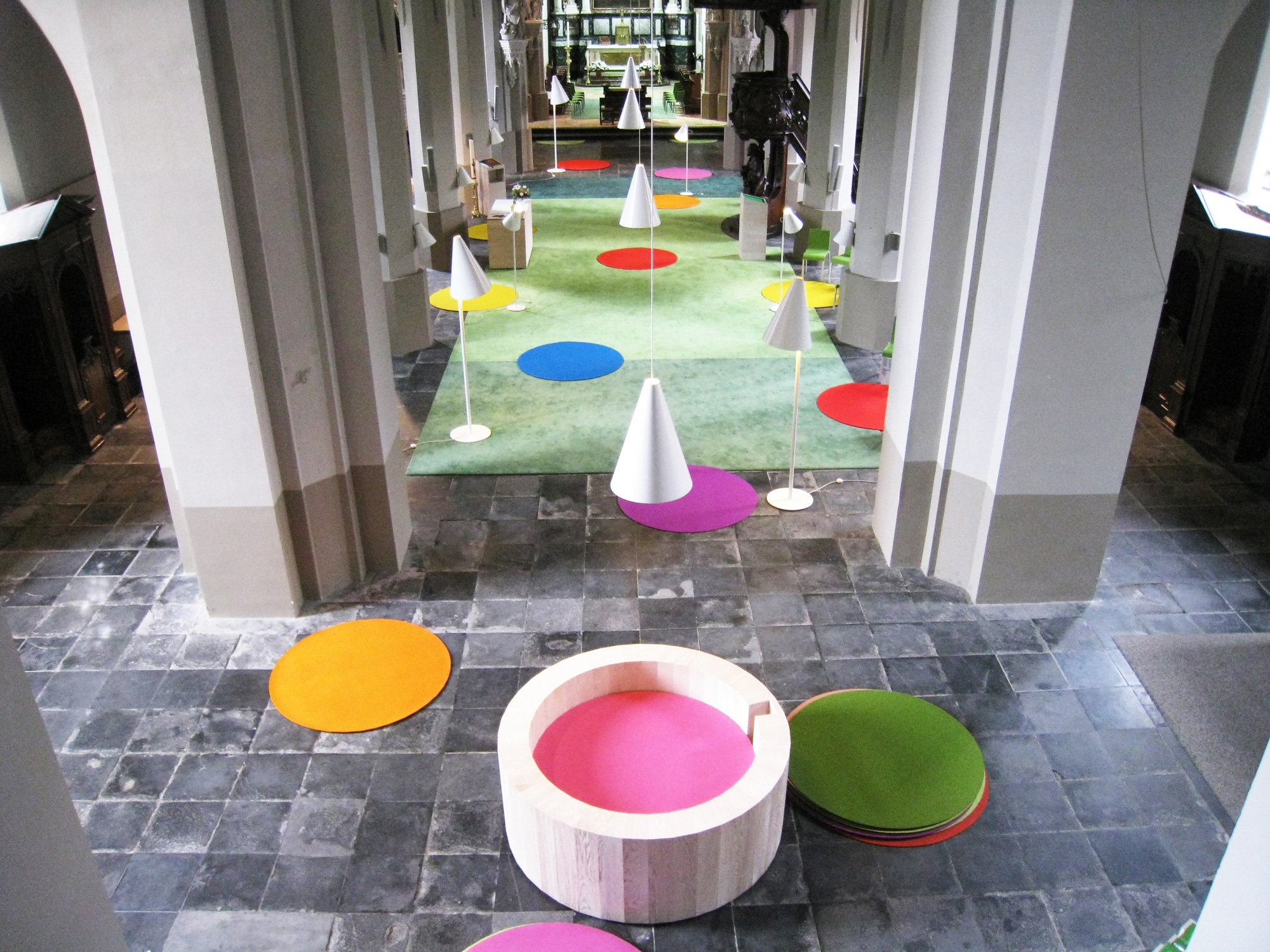
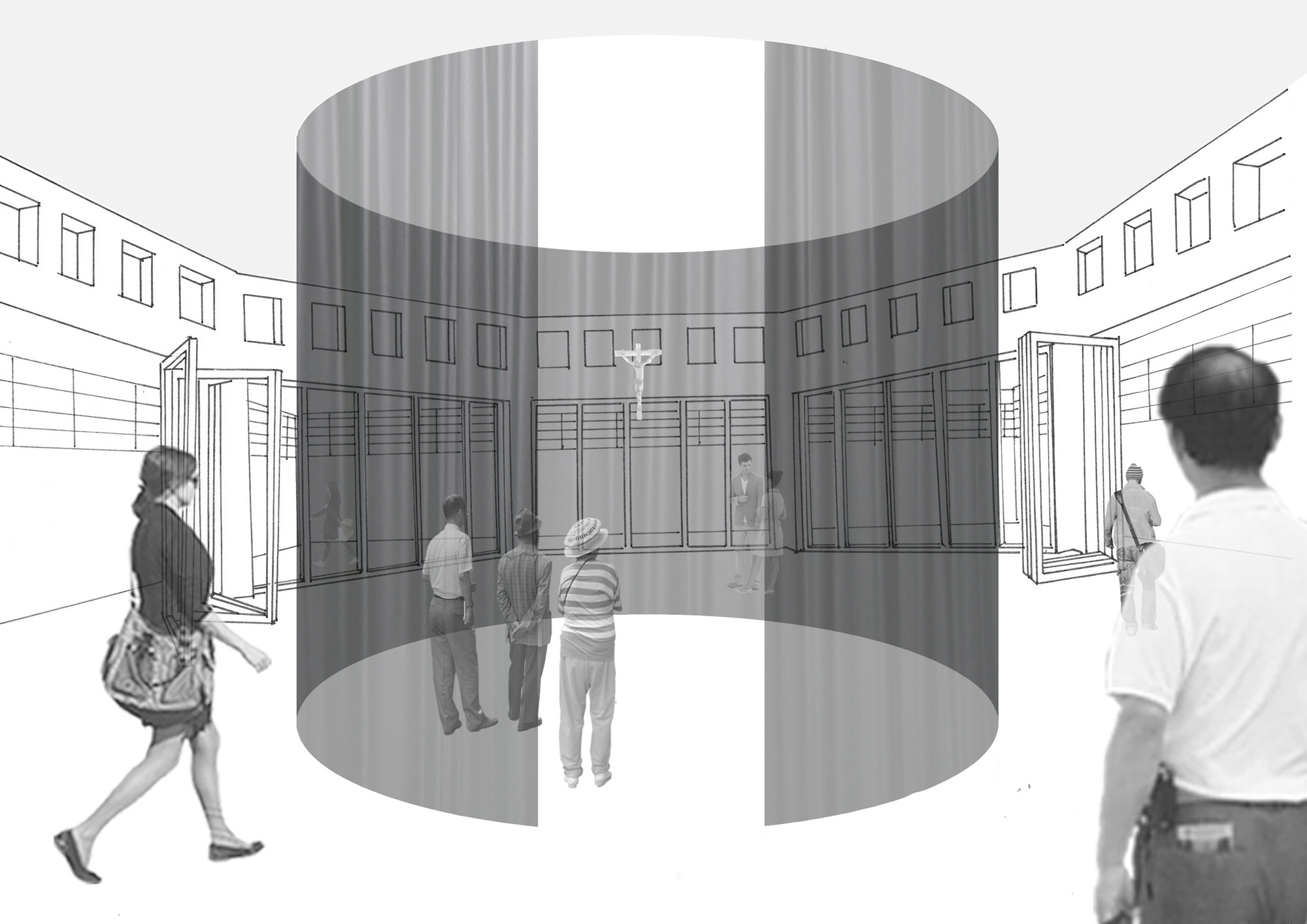
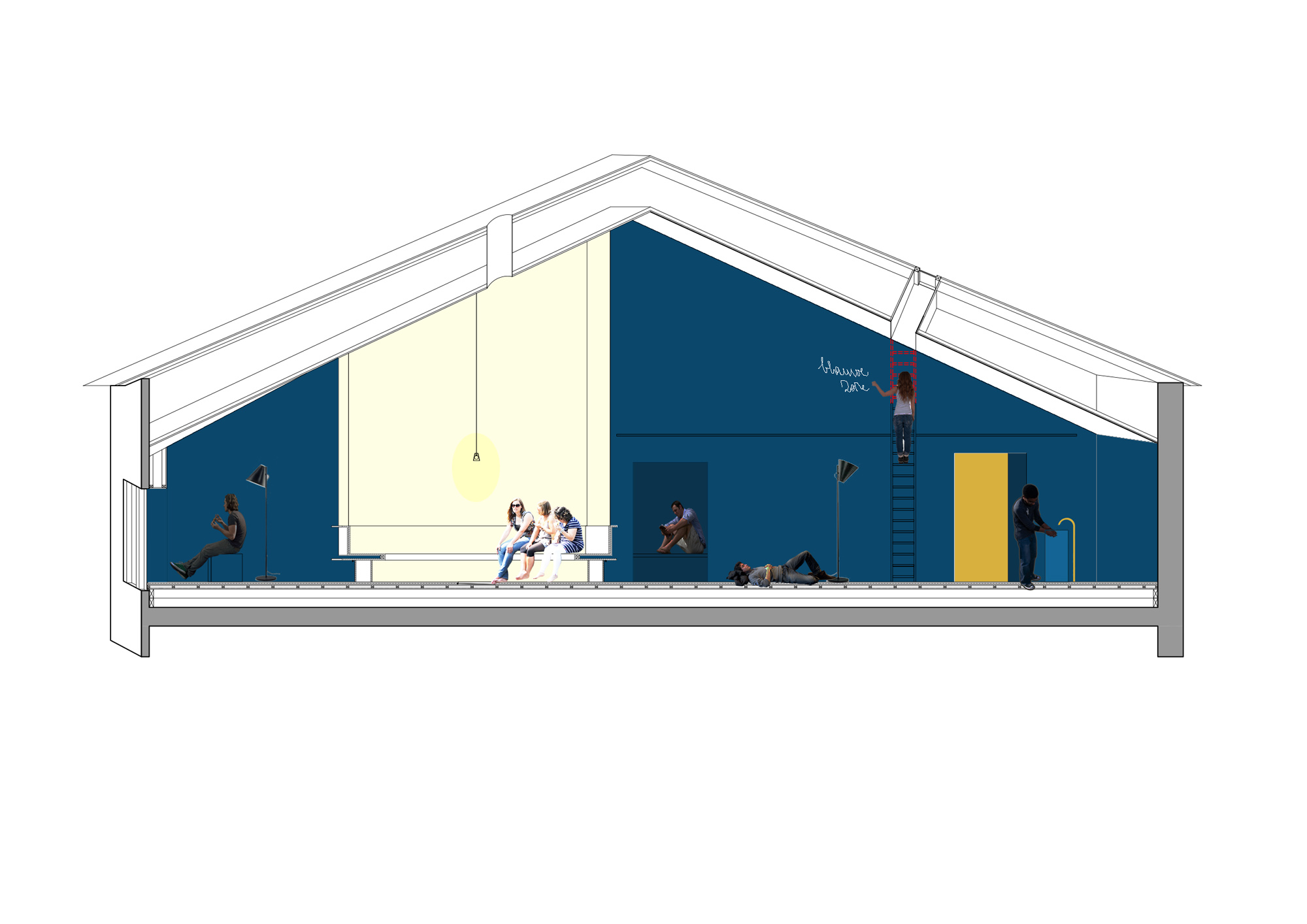
This preliminary inquiry results in a sharp and supported vision, a strong team and various architectural questions. from this moment onward, ‘tcct’ starts to concentrate again on the space aspect of the assignment. Even here, its own design vision has been developed. The sacred space has evolved from a space of answers into a space of quests6. A place where people are given the chance to develop their spiritual identity individually or within a group. to create a sacred space, the designer essentially has the same architectural means at his disposal as for any other space: light, proportion, materials, time…but these are used in another way. The tension between comfort and challenge, between function and meaning is more important. Comfort offers the customer rest and safety, and is necessary to allow fragility and authenticity. Challenge keeps the customer alert and in motion. Space questions him or helps to remind him of what is essential7. The combination between comfort and challenge results in different possible interpretations of the space8. Because society changes rapidly in quest, our spatial interventions have to be temporary as well as easily adaptable. It offers the freedom to make pronounced and daring interventions.
Sacred space, as a separate, closed place of contrast that you can visit whenever you like, is what we need more of nowadays. There is also the need for a permanent spiritual layer present throughout an entire site that you can visit whenever overwhelmed by something beyond your understanding. Based on many interviews with monks and sisters, we have come to learn that beauty can be found in daily life as well as in life’s mystery: the generosity of life!
6 Alain de Botton, Religion for atheist
(Atlas, 2011), 241-269.
7 Sylvain De Bleeckere and Roel De Ridder, The open church (Pelckmans, 2014), 81.
8 T. Coomans, H. De Dijn ja De Maeyer, ed. Loci sacri, understanding sacred places (Leuven University Press, 2012), 50.