Joke van Hengstum
Interior Architecture – A Recognised Profession in Europe?
IF you ask the man in the street if he knows the profession of interior architecture / design, the answer will be ‘they choose and advise curtains, wallpapering, painting colours’. If the accent is on design they will answer ‘they invent chairs, tables and all sorts of interior stuff’.
The fact that this image of the profession is still common thinking all over Europe has to do with the profession’s unclear profile. In Europe, it is estimated that more than 80 000 people are employed in this field1. The ECIA unites over 8000 professionals through the membership of National Organisations and I am sure they all know exactly what they do and that they have a lot in common.
For more than 100 years, there have been schools in Europe with courses on ‘interior’. Nowadays there are 10 institutes2 in Germany alone for the education of Masters in interior architecture.
We counted about 40 masters courses in the ECIA database in 2010 so I estimate that there are over 200 in about 35 European countries. how is it possible that the daily work of these professionals is so confusing with its image in society?
Interior architects claim to have the skills and knowledge to work in the building environment, in architecture, for the use of spaces. I am afraid that they are much too focused on themselves and their position in the field of architecture and not enough on their role in society. You can tell people what you are doing but speaking in connection to the needs and wishes of listeners is another thing.
Interior architects lack a strong profile in society.
How It Started
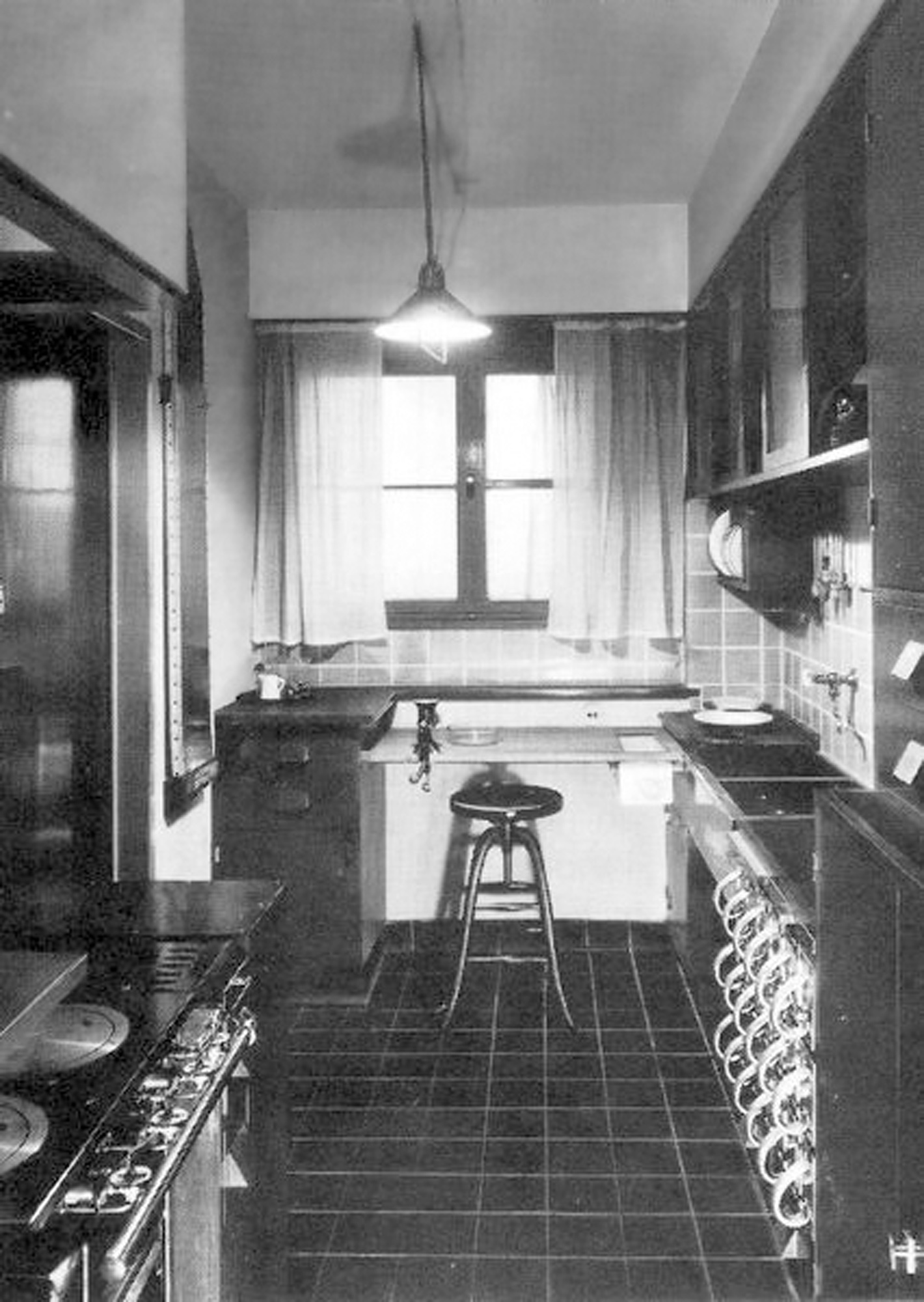
In the twenties of the last century, functionalism was an international movement in architecture and applied arts as a reaction to historical styles. We see two directions in this movement: internationally oriented and socially oriented.
The socially oriented movement began with theoretical ideas about more efficient housekeeping for the working class.
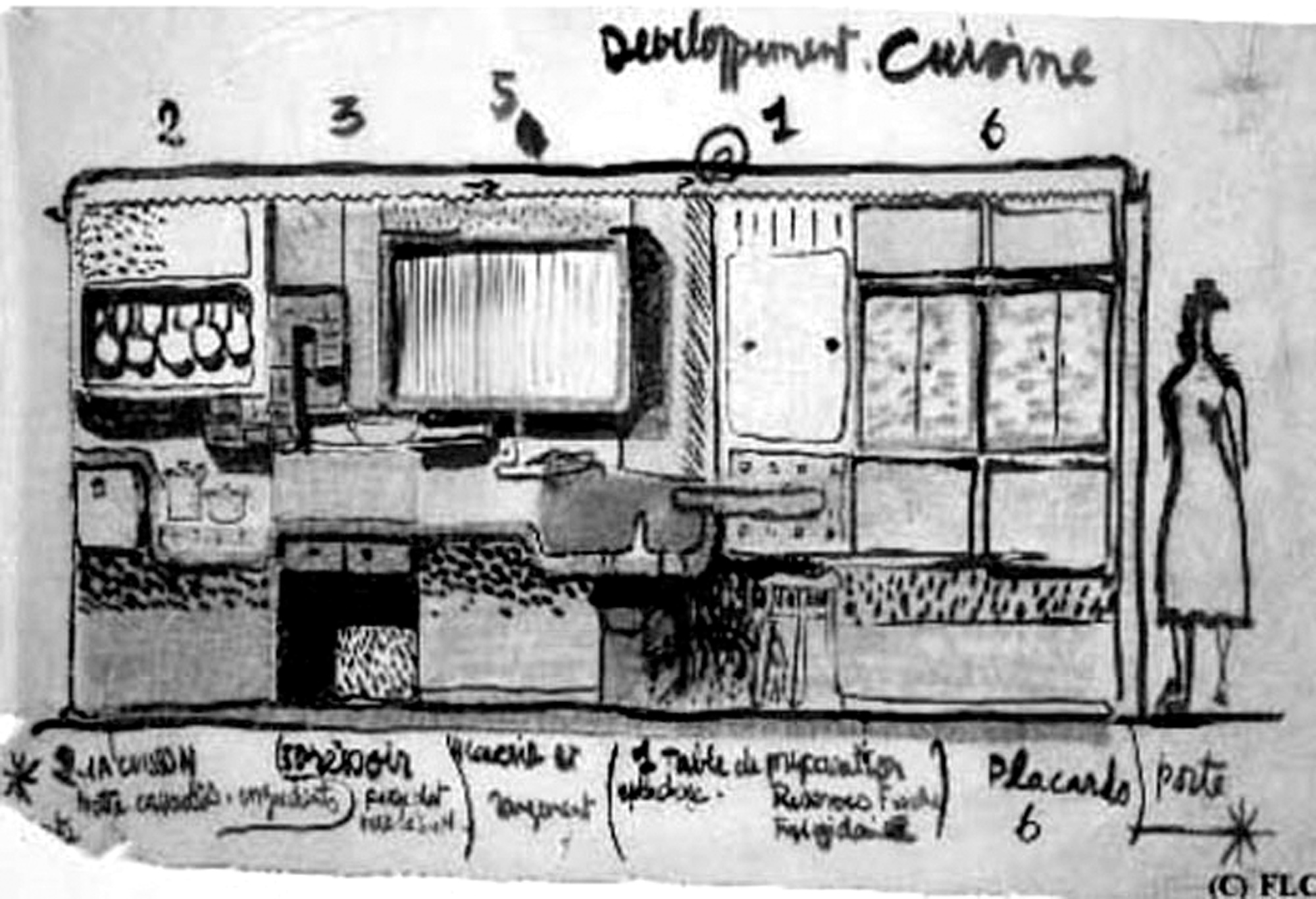
The presentation of the frankfurter Küche in 1930 in Sweden at the exhibition in Stockholm led to the modular kitchen of Le Corbusier, the Münchener küche as an eat-in kitchen, the Swedish kitchen and the Swiss kitchen.
The internationally oriented movement developed a new aesthetic style. Examples of this style can be seen in Italy and france in the interiors by Charlotte Perriant, René herbst and gio Ponti.
A result of this functionalism was the movement to ‘teach people how to use their house, how to furnish it’. In the Netherlands, the foundation ‘goed Wonen’ (good Living in the sense of responsibly and consciously living interiors) started up in 1946. The same kind of movement existed in the Scandinavian countries and in germany. In the south of Europe, the emphases were based more on the aesthetics of design and interiors.
With its background in decorative arts, the latter became the basis for interior architecture as we have seen in education for a long time. Colour plans, material plans, lay-out, etc.
The growth in the amount and availability of building and finishing materials made knowledge of properties in relation to the health and safety of the users of space necessary.
Changes in the scale of professional commissions instead of private customers also enlarged the responsibility of interior architects.
This is the kind of movement you often see when the development of new techniques expands possibilities. See for example what is happening in lighting. Artificial and day lighting were part of the work of architects and interior architects. New specialists have emerged together with the emergence on the market of new light sources, light colours, electronic equipment for dimming and colour mixing, and techniques for controlling and managing daylight. They all work in the field of architecture.
The lighting designer uses his knowledge for making choices out of the immense range as part of the total design of the architectural space. These choices are not for the attractive design of the hardware (the luminaries) but first and foremost for their contribution to the perception of the space.
The contribution of specialists is led by knowledge and experience. Cooperation between the different disciplines is important. They have to understand and provoke each other, starting from an equal level of education.
The Current Position
The founding of national organisations is a part of the professionalization process. In the Europe of the 1940’s and 1950’s, professionals felt the need to distinguish themselves from the uneducated workers in the field. A code of conduct, a high standard of training and an agreement concerning the content of a contract with the customer were the main goals.
In my opinion, the most important current issue for professional organisations could be communication concerning knowledge in relation to responsibility as well as the safety, health and well-being of the users along with the consequences for society in terms of the use of energy and materials. The new focus in society is on care for the earth by being aware of the finite amount of commodities, by reduction of waste and of the use of fossil energy.
The lifetime of interiors is not as long as it is for building structures so the question of deconstruction and reuse of the different parts of the design is an issue.
Questions of environmental consequences mean that the interior architect has to take the lead in design using demountable structures and reusable materials. The design of the materials is not of primary importance here but rather the design of the solutions in integrating building techniques with inventive applications. Commissions became absolutely different over the course of a decade. It demands leadership and a different relation to the customer to integrate the new reality into the design.
With the open borders in Europe, we have a free market for the exchange of goods and services. In combination with growing complexity, it is increasingly determining the position of the specialist in serving the users of space.
In the field of architecture, the built environment in contact with the user is the field where interior architects/ designers find their job.
Europe
In some European countries, professional titles are protected. In some cases, the title ‘architect’ is protected, meaning that interior professionals are not allowed to use the title interior architect and instead have to use interior designer. In some countries where all disciplines in architecture are protected, as in Germany or the Netherlands, interior architect is a protected title. Protection of title does not mean that the work of professionals is protected, only calling yourself an interior architect or interior designer is prohibited.
Protection of title means a legal standard for the required level of education. Opinion concerning the content of study often differs between states but also in the countries themselves.
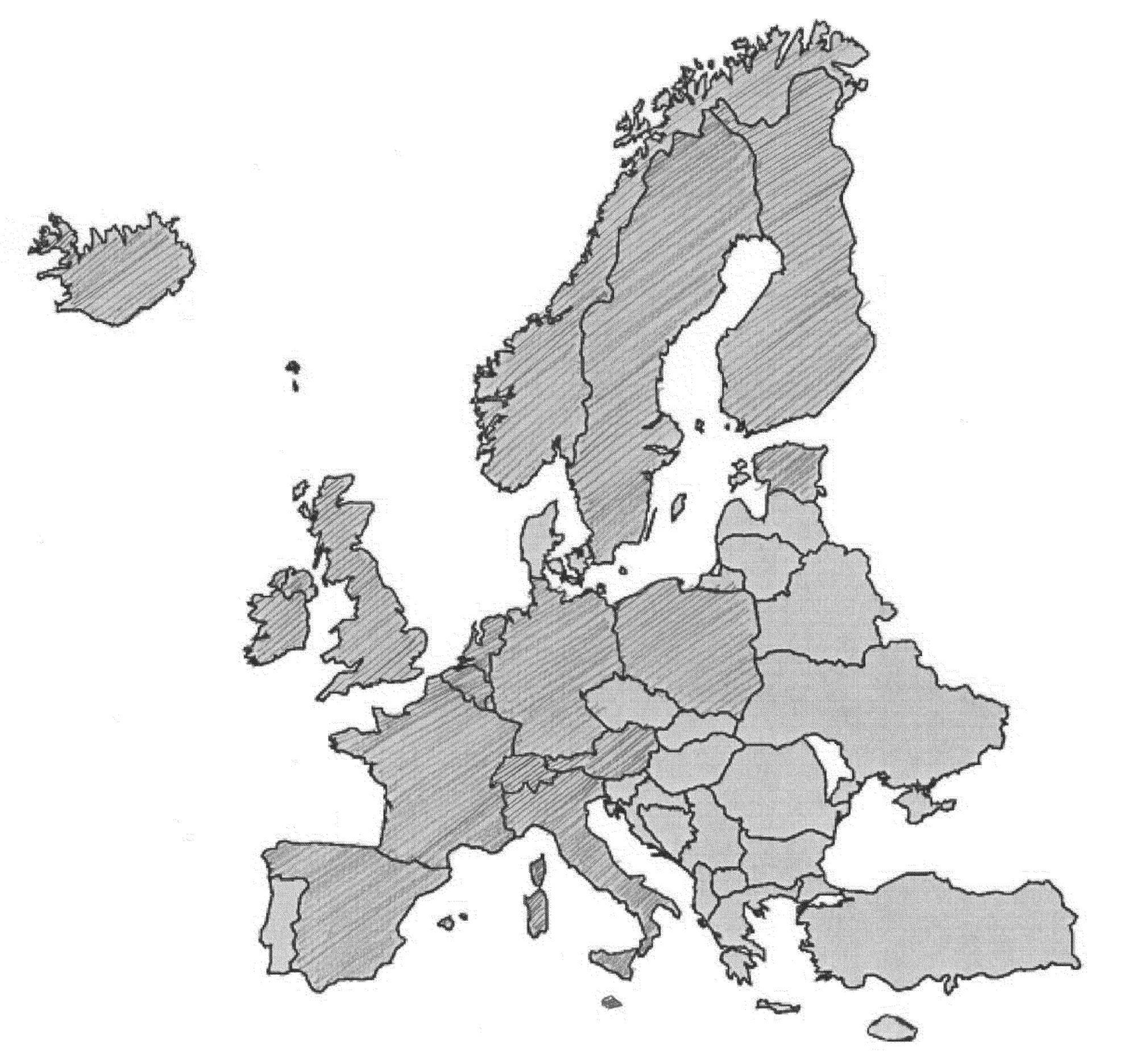
ECIA has set itself the objective of reaching agreement concerning that content in Europe. We have initiated the ECIA charter of interior architecture training (updated in 2013) and a programme for recognition of schools. The charter is the admittance standard of graduation in the ECIA member countries.
In Europe, a standard for recognition of the profession is set by the European Commission in the Common Training framework. The principle consists of common training with a minimum set of knowledge, skills and competences necessary for the pursuit of a specific profession. This has to be regulated in at least one third of the Member States in Europe.
To attain this situation, schools and professionals have to work together. It looks like it is not always important for students to study for a recognised profession, but it could be interesting for schools. It is important for young professionals to have the possibility to work in a larger area than their own region.
The profession itself needs a certain critical mass to develop in knowledge and depth. The structure of bachelor’s and master’s education needs a new orientation in content for both levels in relation to the field of practice. PhD studies and research will help to develop a historical awareness and new ways for positioning in society. Of course, all schools have their own history and cultural background in this development.
Measuring the economic impact of interior design in Europe is also an important instrument for positioning the profession. The European statistical institute NACE has a numbering system. The numbering systems of the different countries are related to that system. The problem is that the way countries number professional activities are different. In one country, interior architecture is classified under industrial design, in another it is under furnishings, etc. Streamlining all national systems first of all and thereafter registering them properly in the European system is a lengthy process. In a market oriented economy, the turnover of a professional activity gives it an important voice.
In Europe, we share our history but cultural differences are extensive. If you see pictures of interiors from Italy, Spain, Germany or the Nordic countries, everybody can see the differences. Last year, the ECIA gave a presentation of representative examples of the work of members of the national organisations. The origin of the work was often visible. The media and our compelling culture of pictures create the impression that a common international style appears to be emerging, but a countermovement is coming. Awareness of the different cultural backgrounds can help to develop one’s own style. People’s growing interest in positioning themselves as belonging to a regional context as seen in ‘local food’ and the use of local materials can also be a stimulant for students in design. These are all related to a more sustainable way of living and not to a nationalistic preference. This could be a chance for designers to react to this interest. In a global world, we all need the safety of roots.
My years as ECIA president have given me the chance to see schools all over Europe.
In the UK, I learned that the high costs of education made schools more responsible for the later employment of the student. In one way, that is a good development, but in another way, study, and certainly an education in a creative direction, also needs moments of reflection at a standstill, of wasting time. The feeling of freedom to also follow paths leading to nothing can be part of the growth of an inventive mind. too great a focus on working for a place in the market is in contradiction to feeling free.
From Denmark I learned that the focus on design appeals to the dream of students for fame in becoming a designer. But if many of the graduates do not find a place in the market, in times of cuts in public spending, schools will not be paid for educating more designers.
Governments also rely on economic numbers.
The anticipation of times when all work will be done by robots means that we need creative minds but not that we don’t need professionals anymore. It requires knowledge, skills and experience to bring all needs and technical equipment together in safe and healthy interiors that ‘feel good’.
There will always be dynamics of theory and practice in the education of professionals.
We need consistency in the basics and the level of education.
Education and practice need each other. Courses cannot exist without the market and the market cannot operate without education. If in the global world of design the profession is to be distinguished, it needs a strong profile. A place between the architectural disciplines.